
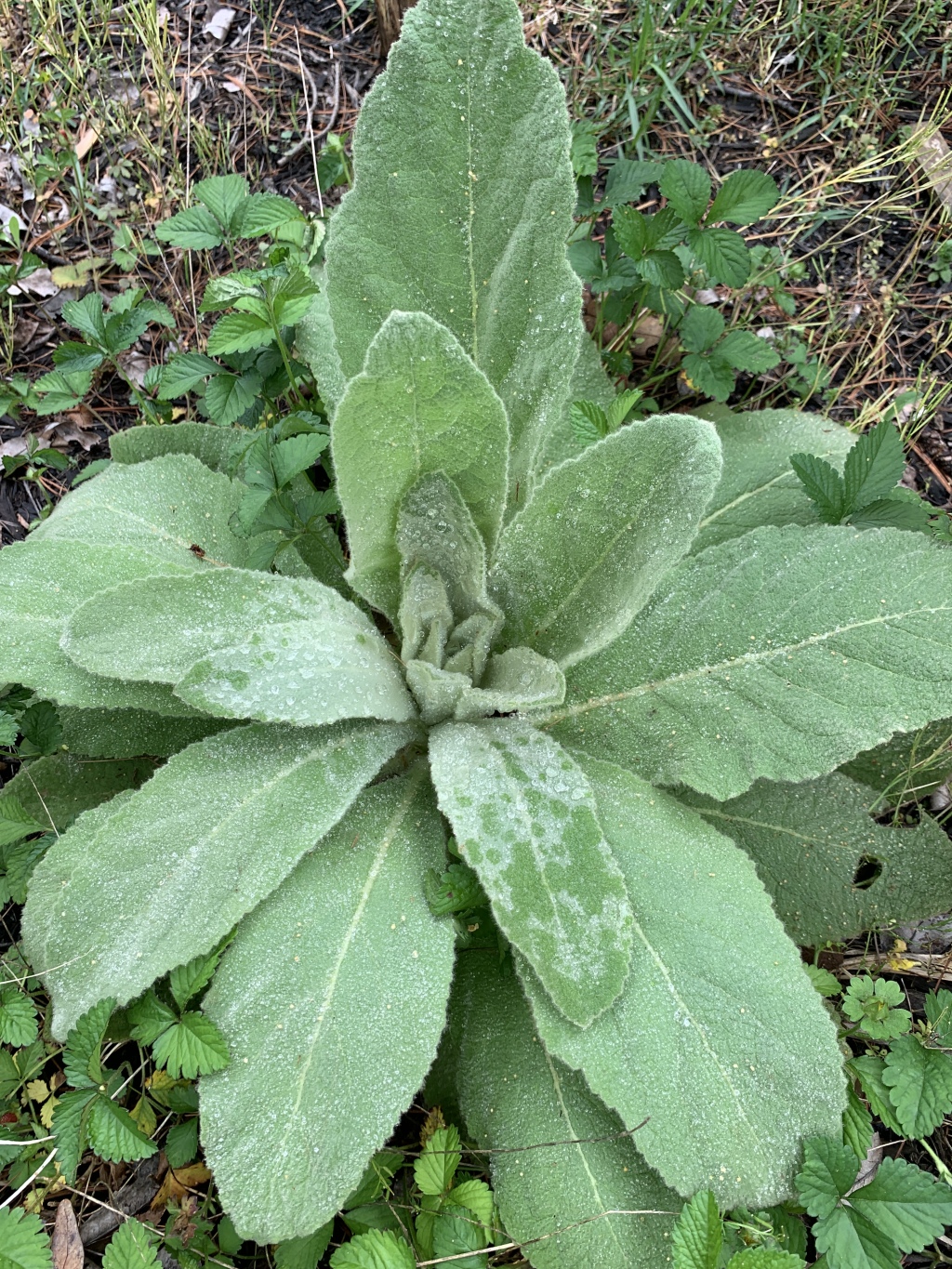
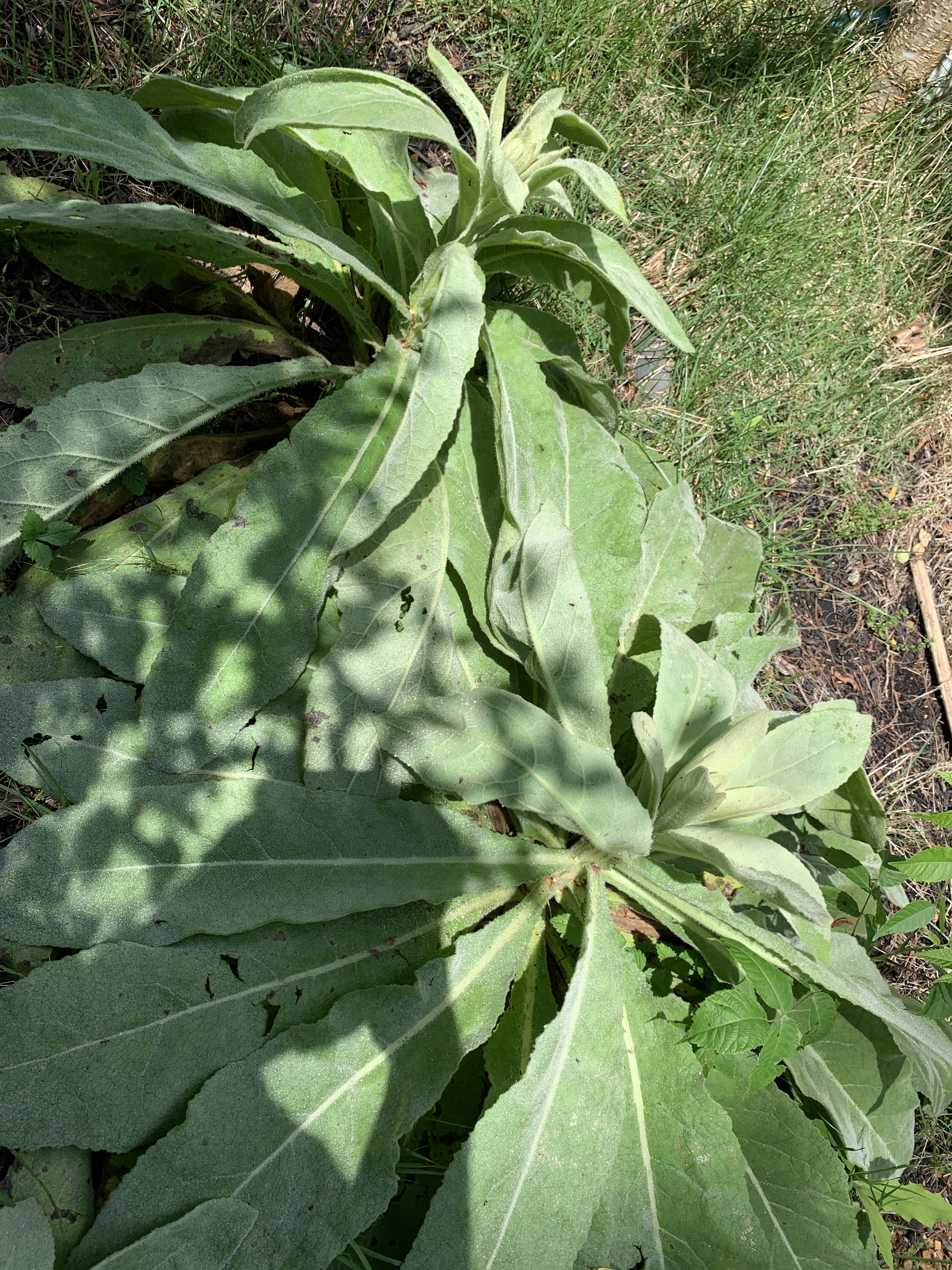
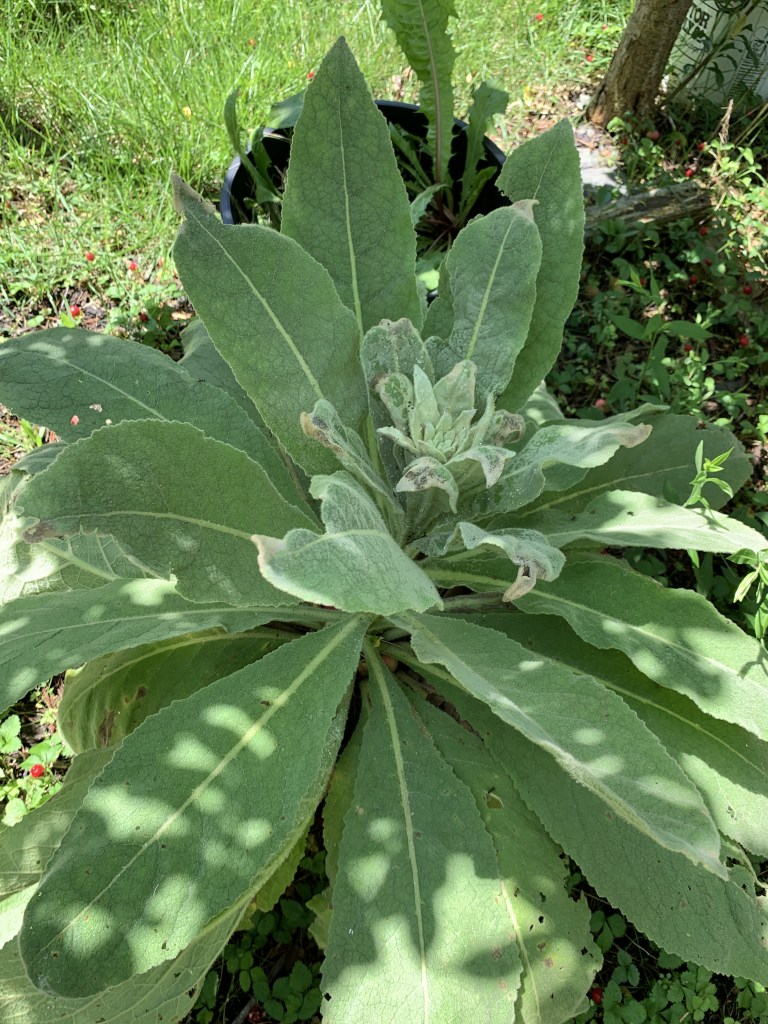
A couple of years ago we threw some mullein seeds around our orchard area to start sourcing our own mullein. Well, they’ve grown into magnificent second-year plants, and with their towering stalks reaching for the sky, it’s time to harvest their bounty – the velvety mullein leaves!
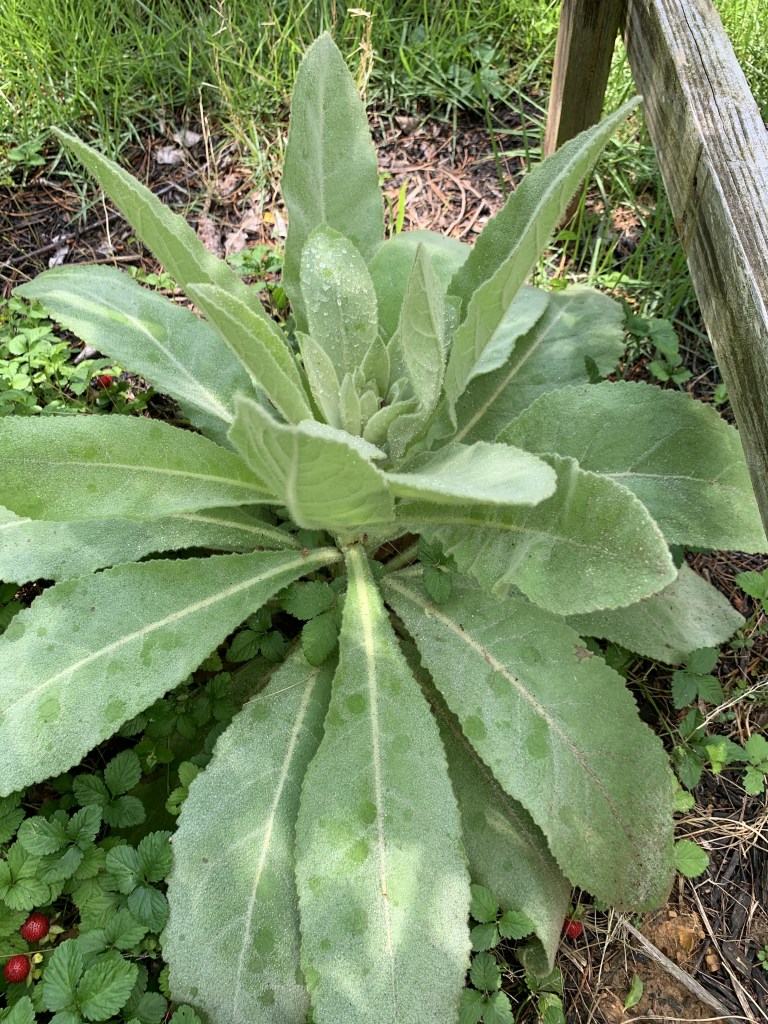
Mullein, also known as great mullein or common mullein (Verbascum thapsus), is a majestic biennial herb with a long and fascinating history. Standing tall with its fuzzy, grey-green leaves and a towering central stalk crowned with yellow flowers, mullein is a familiar sight in meadows and fields across the globe. But beyond its impressive stature lies a rich legacy of traditional uses, making it a valuable addition to any herbalist’s garden.
Side note, as part of our series of books, later this year we will be releasing our deep dive on mullein! It’s in the works now. https://rjhomestead.com/books
A Journey Through Time: Traditional Uses of Mullein
Mullein leaves boast a rich tapestry woven across cultures and centuries. For millennia, various civilizations have recognized the potential health benefits this unassuming herb may offer. Historical records from ancient Greece, for example, mention mullein’s use by the renowned physician Dioscorides, who recommended it for respiratory ailments.
Fast forward through time, and we find mullein leaves playing a significant role in Native American traditions. Tribes across North America utilized mullein leaves in various ways, from brewing them into soothing teas for coughs and colds to crafting poultices for wound healing and topical applications. The fuzzy leaves were even incorporated into smoking blends, with the belief that the smoke could help clear congestion and ease respiratory discomfort.
Evidence of mullein’s historical significance extends beyond anecdotal accounts. Traditional Chinese medicine also has a place for mullein, where it’s known as “niu xi” and has been used for conditions like coughs, asthma, and even hemorrhoids. Similarly, European herbal traditions embraced mullein, incorporating it into remedies for earaches, skin irritations, and even diarrhea.
The historical appreciation for mullein leaves transcends geographical boundaries. While the specific applications may have differed slightly across cultures, the underlying theme remains consistent – a belief in the potential of mullein to support well-being. This historical journey through time highlights the enduring human connection with nature’s bounty and the potential benefits that plants like mullein may offer.
Mullein’s Main Focus
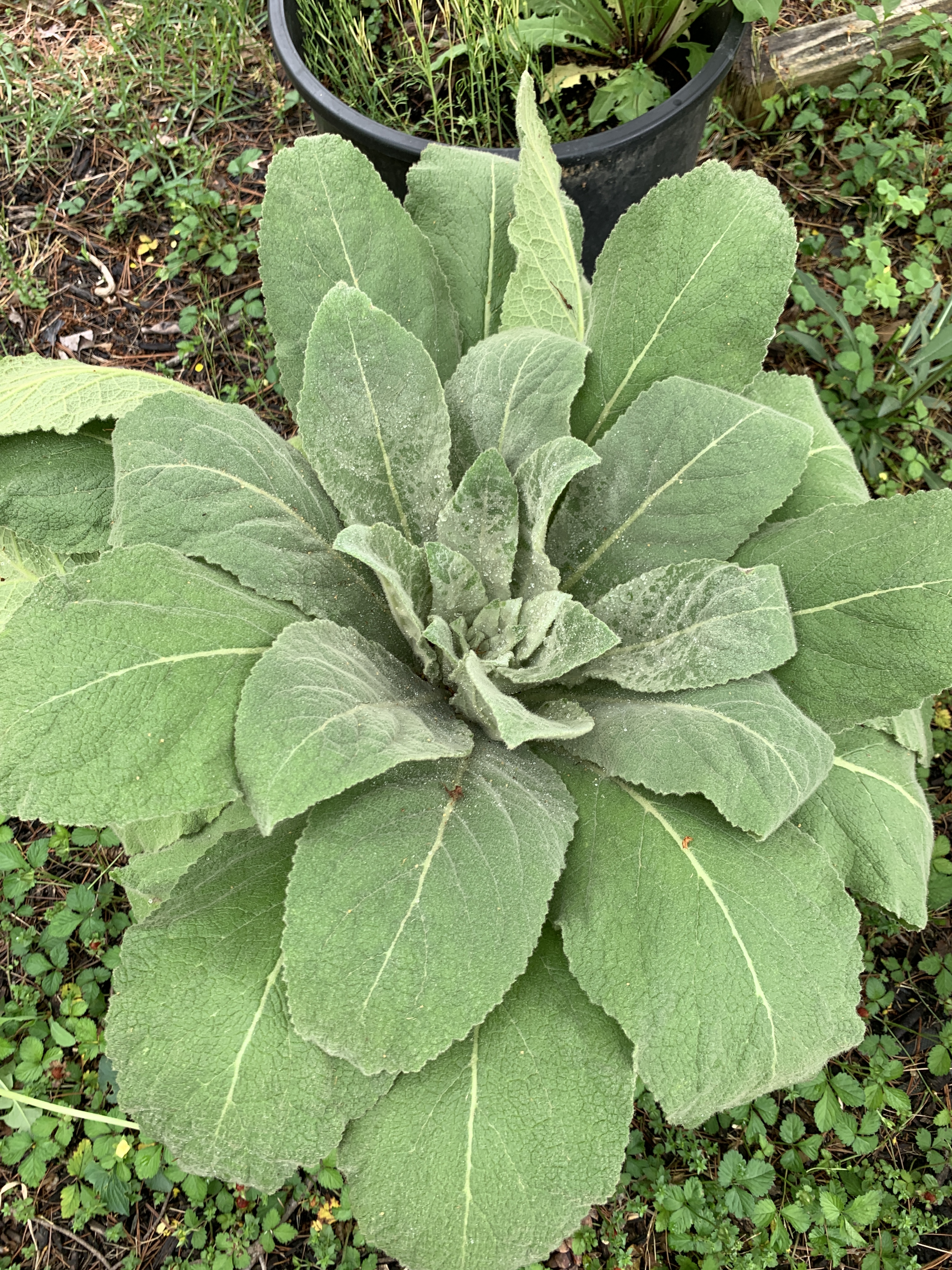
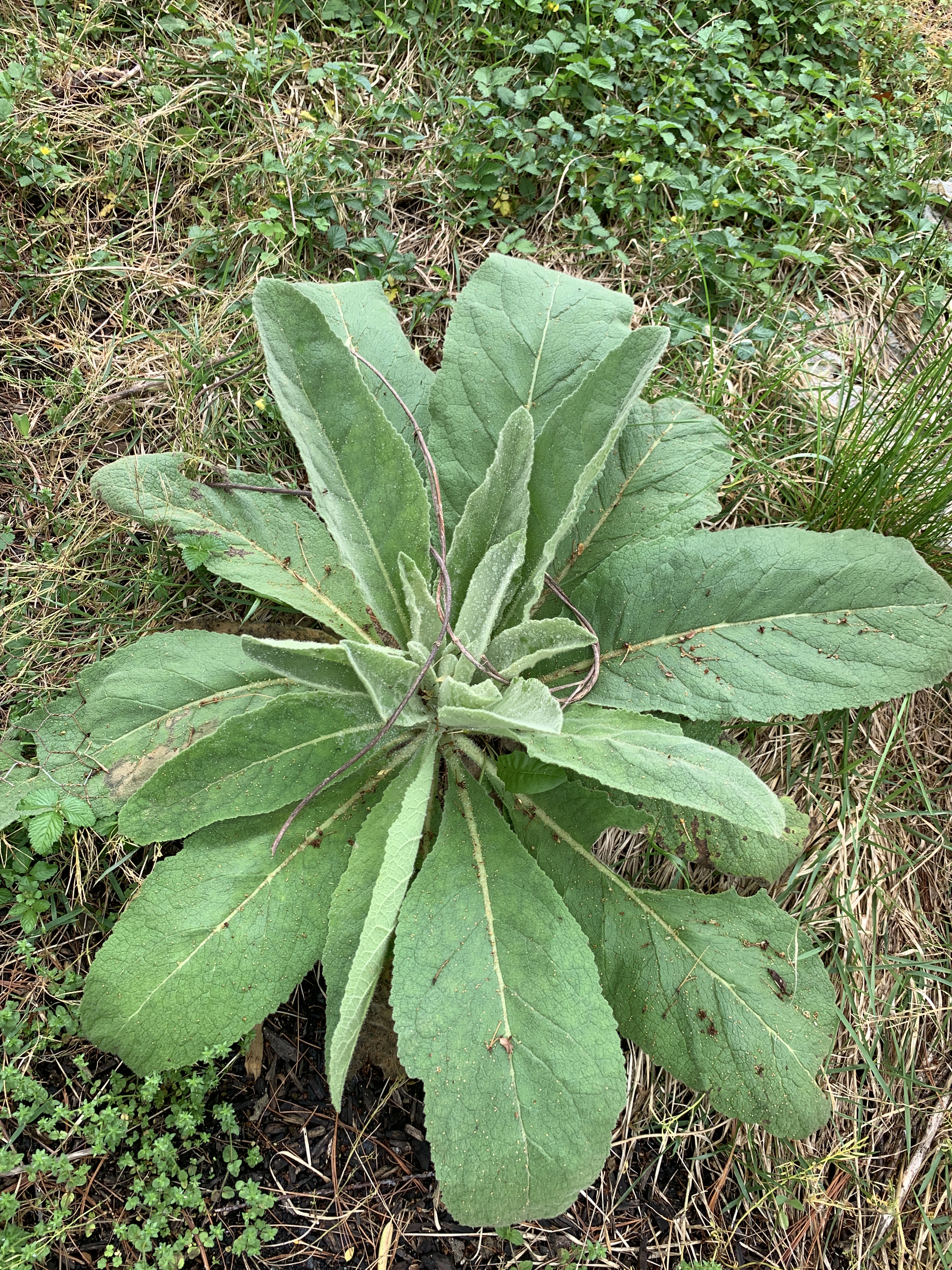
While mullein’s historical uses are vast and intriguing, its main appeal in the modern world lies in its potential to address congestion and coughs. Modern herbalists often recommend mullein for its expectorant properties. Expectorants help loosen mucus and phlegm, making it easier to cough up and clear congestion. This can be particularly beneficial for those suffering from coughs, colds, or bronchitis. Mullein may also offer some soothing properties for irritated throat tissues, adding to its appeal as a natural remedy for respiratory discomfort. While mullein’s historical use for respiratory conditions is extensive, modern research has begun to explore its potential as scientist investigate its anti-inflammatory and antimicrobial properties in lab controlled settings.
Harvesting the Goodness
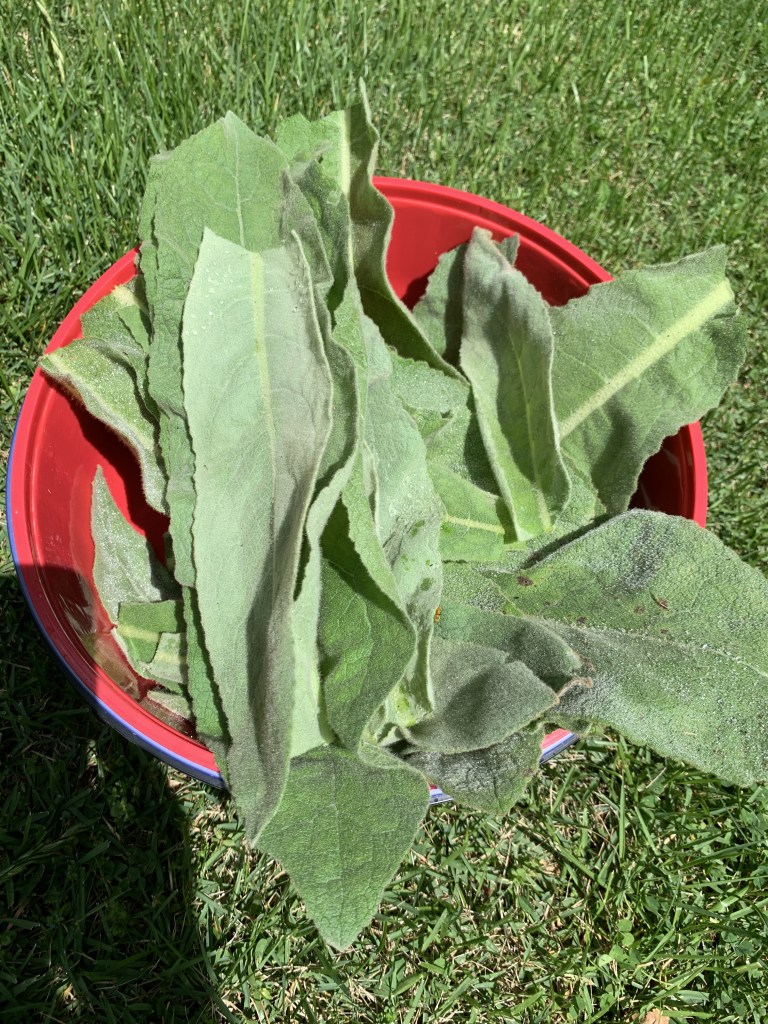
Now that our mullein plants are sporting their impressive stalks, it’s the perfect time to harvest the leaves for our herbal endeavors. Here’s how we do it:
- Timing is Key: Aim to harvest the leaves before the flowers bloom. This ensures you get the most potent leaves for your purposes.
- Focus on the Prize: Look for the larger, healthier leaves growing lower on the stalk. These will offer the best yield and flavor.
- Sustainable Practices: Only harvest what you need, leaving a good portion of the leaves on the plant to allow it to continue thriving and potentially flower.
Patience is a virtue when it comes to mullein! While the leaves are harvested before the flowers bloom for optimal potency, the beautiful yellow flowers themselves hold value as well. Wait until the blooms have fully opened and show signs of drying on the stalk. This usually happens in mid to late summer. You can then carefully clip the flower clusters and hang them upside down in a cool, dry, and well-ventilated location to dry for later use in teas, decorative purposes, or even as a natural moth repellent! Personally we love mullein flowers to make cough syrup, which we’ll cover in another post later this year when we start harvesting the flowers.
Drying Methods:
Once you have your harvest, it’s time to dry the leaves for long-term use:
- Air Drying: The traditional approach involves air drying the leaves. Wash them gently, pat them dry, and arrange them in a single layer on a mesh drying rack in a well-ventilated location out of direct sunlight. Turn the leaves daily to ensure even drying. This method can take several days, depending on the weather conditions.
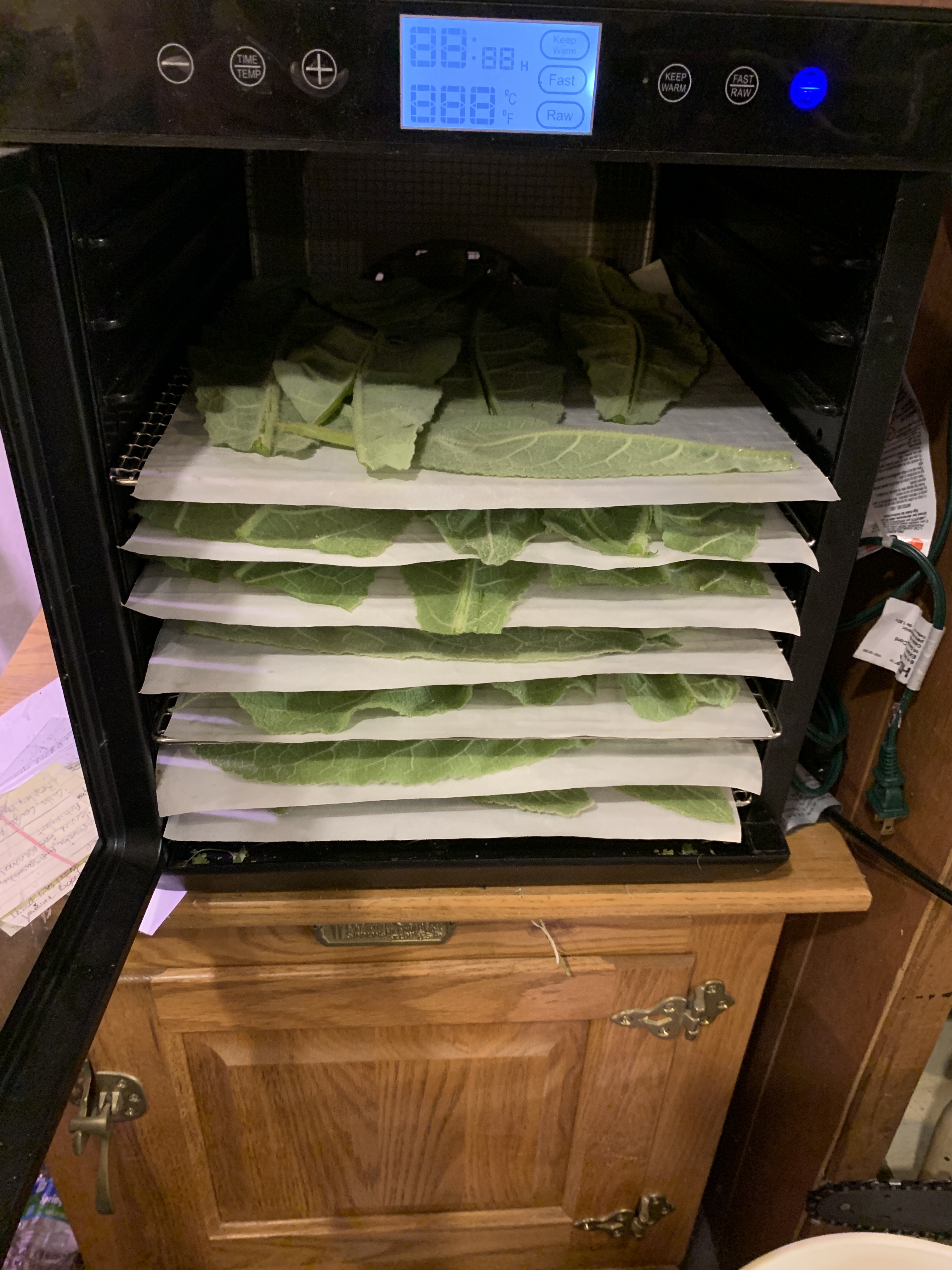
- Dehydrator Power: For a quicker and more controlled drying process, a dehydrator is a great option. Set your dehydrator to a low temperature (around 95-115°F) and arrange the leaves in a single layer on the trays. Drying time can vary depending on the thickness of the leaves and your dehydrator’s settings.
Pro Tip: Mullein leaves have a thick, central rib that can slow the drying time. To help speed things along we split the rib down the center, allowing the moisture to easily escape when dehydrating.


From Leaves to Brews: Mullein Tea and Tincture Recipes
Once your mullein leaves are completely dry and crumble easily in your hand, they’re ready to be transformed into various herbal remedies! Here are two popular options:
- Mullein Tea: Steep 1-2 teaspoons of dried mullein leaves in a cup of hot water for 5-10 minutes. Strain and enjoy the earthy, slightly bitter tea. You can add honey or lemon for a touch of sweetness. For congestion, breath in the steam while steeping your tea to start getting the benefits right away.
- Mullein Tincture: This concentrated herbal extract requires a bit more effort but offers a potent way to utilize mullein. Fill a jar with dried mullein leaves and cover them with a high-proof alcohol like vodka. Store the jar in a cool, dark place for several weeks, shaking it occasionally. Strain the tincture and dilute it with water before use.
Conclusion:
Harvesting and utilizing mullein leaves allows us to connect with the wisdom of traditional practices and explore the potential benefits that nature offers. From calming teas to potent tinctures, mullein leaves add a valuable element to any herbal enthusiast’s repertoire. So, keep an eye on your mullein plants, and when the time is right, embark on your own journey from seed to sip!


 RJ Homestead
Leave a comment