

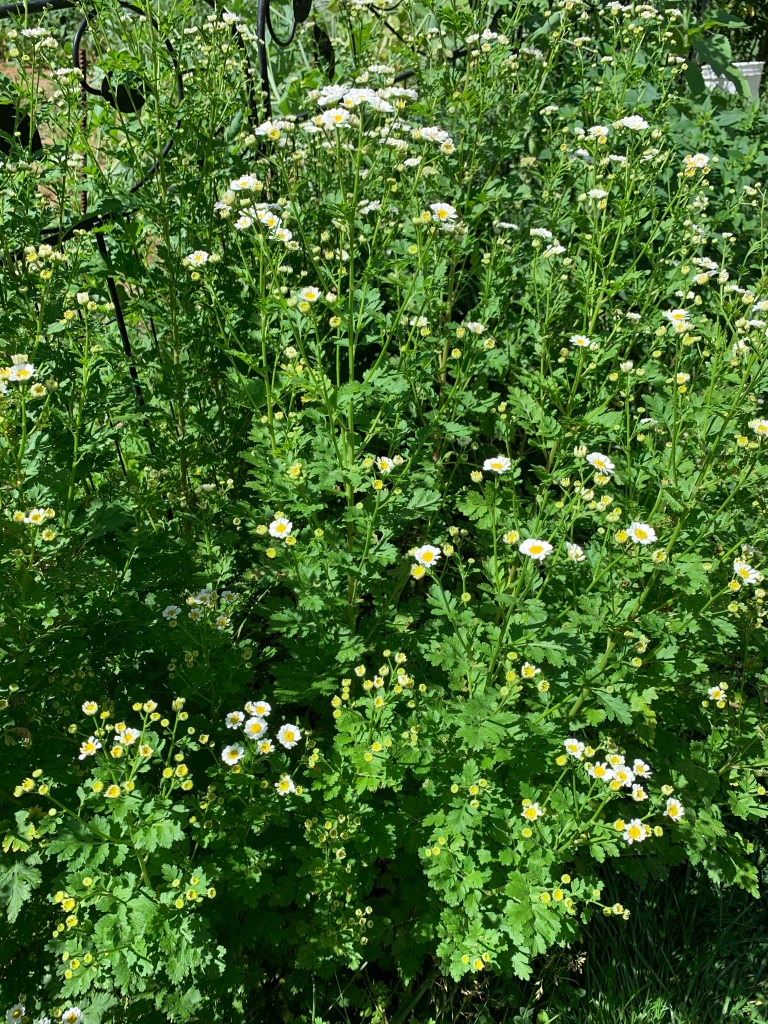
They say the best things in life come in threes, and that certainly holds true for my feverfew this year! These magnificent plants, now in their third year, are absolute giants, overflowing with lush green foliage. This is already my second harvest, and it barely seems to have fazed them – they’re like the Energizer Bunny of the herb world! But unlike the bunny, their endless bounty is a welcome sight, because feverfew has become my personal favorite natural remedy.
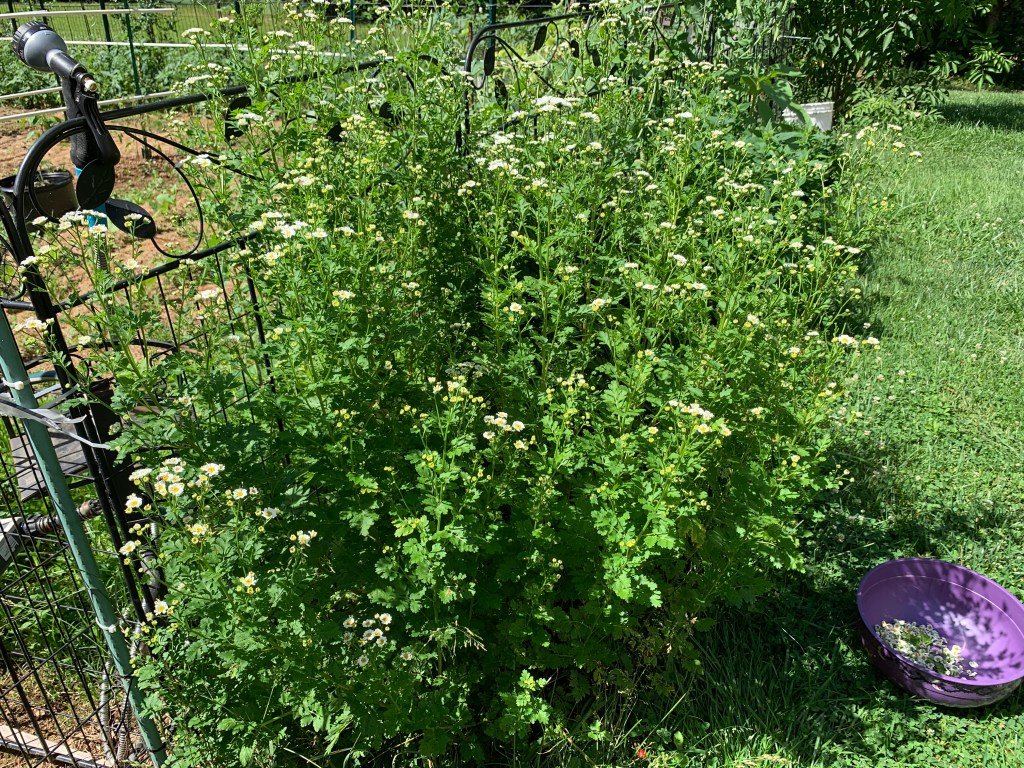
A Historical Headache Hero:
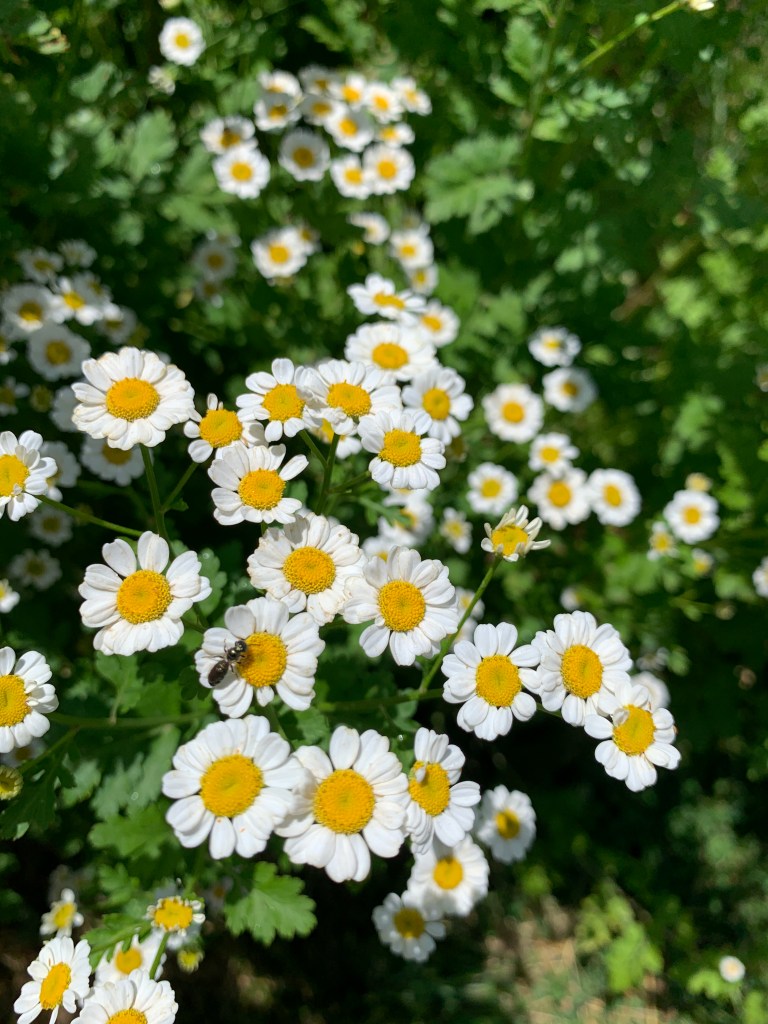
Feverfew (Tanacetum parthenium) is a perennial herb that has been cherished for centuries for its medicinal properties. Native to southeastern Europe, it has been used since ancient times by the Greeks and Romans, who recognized its ability to reduce fever and alleviate various aches and pains. The name “feverfew” itself is derived from the Latin word febrifugia, meaning “fever reducer.” Over the centuries, feverfew’s popularity spread across Europe and eventually to North America, where it became a staple in traditional herbal medicine.
Nature’s Migraine Marvel
Feverfew is renowned for its anti-inflammatory and pain-relieving properties, making it a popular natural alternative to over-the-counter painkillers like ibuprofen. The herb’s effectiveness in treating migraines is particularly notable. Feverfew contains an active compound called parthenolide, which has been shown to help reduce the frequency and severity of migraine attacks. This compound works by inhibiting the release of inflammatory substances in the brain and preventing the constriction of blood vessels, which are common triggers for migraines. Regular use of feverfew can lead to a significant reduction in the number of migraine days and the intensity of headaches, providing a natural and effective option for migraine sufferers who seek to avoid the side effects of conventional medications.
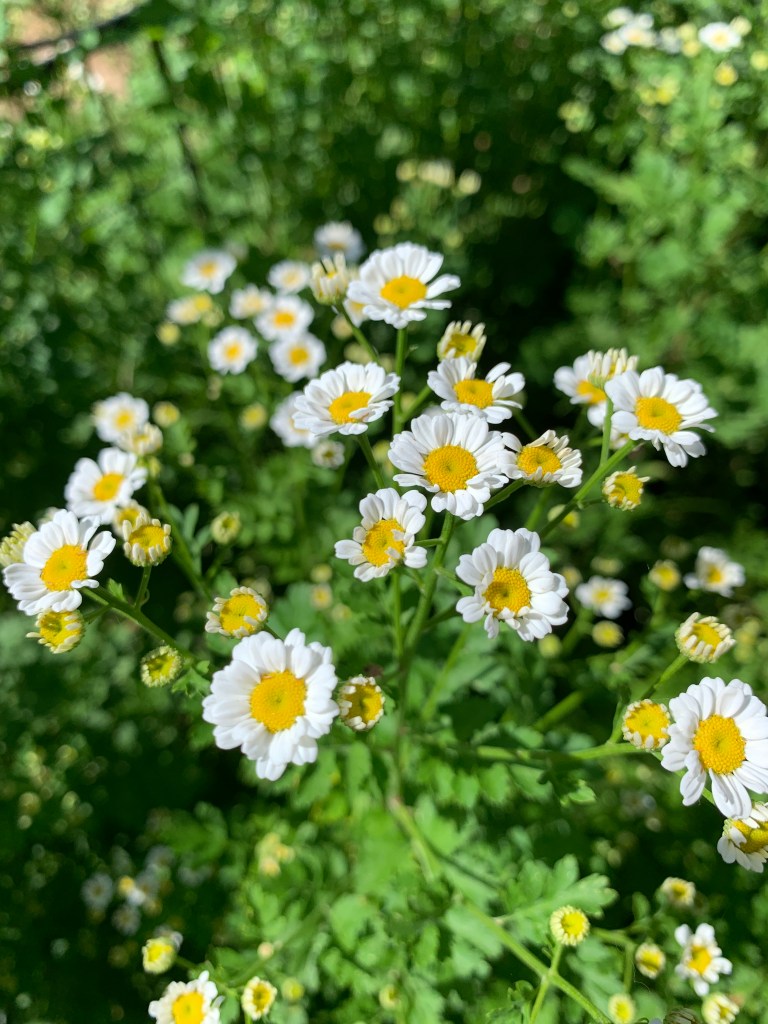
In addition to its migraine-relief properties, feverfew is widely used to alleviate a range of other conditions. Its anti-inflammatory effects make it beneficial for managing arthritis symptoms, as it helps reduce joint pain and swelling. Women suffering from menstrual cramps can also find relief with feverfew, which acts to ease uterine contractions and lessen pain. Furthermore, the herb is effective in addressing general aches and pains, offering a natural remedy for everyday discomfort. Beyond pain relief, feverfew’s anti-inflammatory properties extend to skin and digestive health. It can help manage conditions like psoriasis, an inflammatory skin disorder, by reducing redness and irritation. Similarly, feverfew can aid in the treatment of inflammatory bowel disease, soothing the digestive tract and reducing inflammation. For a more comprehensive exploration of feverfew’s extensive benefits and uses, my book delves deeply into the herb’s history, medicinal properties, and practical applications, offering valuable insights for anyone interested in natural health remedies. Check it out here on Amazon.
Harvesting Your Headache Helper:
Given that your feverfew plants are thriving here’s how to make the most of this herb:
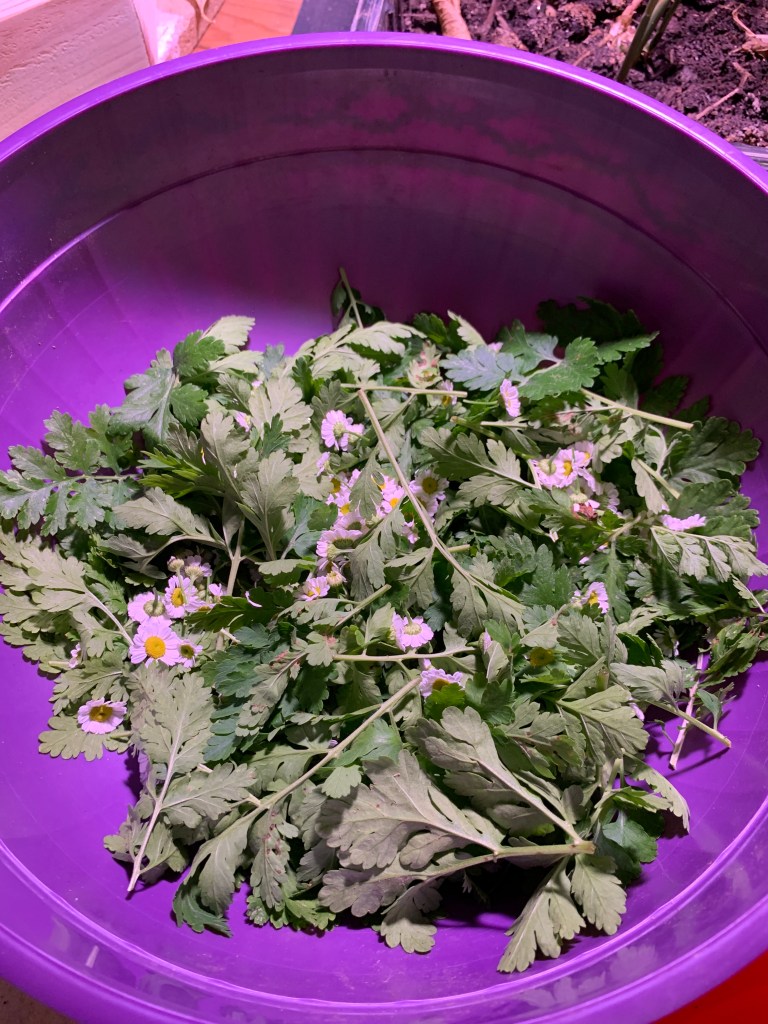
- Harvesting: The best time to harvest feverfew is in the morning after the dew has dried. Use a clean pair of scissors or pruning shears to cut the stems, leaving about 3-4 inches of growth at the base. This encourages the plant to continue producing new growth. Focus on harvesting the leaves and flowers, which contain the highest concentrations of beneficial compounds.
- Drying: Rinse the harvested feverfew gently to remove any dirt or insects. Pat dry with a towel. Bundle the stems together and hang them upside down in a well-ventilated, dry, and dark area. Alternatively, you can spread the leaves and flowers on a drying rack or screen. Allow them to dry completely over several days until they are crisp to the touch.
- Storage: Once dried, store the feverfew in airtight containers away from direct sunlight. Properly stored, dried feverfew can last up to a year. For a deeper understanding of how to maximize the efficacy of your feverfew harvest, my book provides detailed guidance and tips.
From Plant to Cup (or Tincture): Using Your Feverfew Bounty
There are several ways to enjoy the potential benefits of your feverfew harvest:
Feverfew Tea
Feverfew tea is a simple yet effective way to enjoy the benefits of this powerful herb. Here’s a basic recipe:
Ingredients:
- 1 tablespoon of dried feverfew leaves and flowers
- 2 cups of boiling water
- Honey or lemon (optional, for taste)
Instructions:
- Place the dried feverfew in a teapot or a large mug.
- Pour the boiling water over the feverfew.
- Cover and let it steep for about 10-15 minutes.
- Strain the tea into a cup.
- Add honey or lemon if desired for additional flavor.
- Enjoy your feverfew tea warm.
Feverfew Tincture
A tincture is a concentrated liquid extract of an herb, making it a convenient way to consume feverfew. Here’s how to make a feverfew tincture:
Ingredients:
- Fresh feverfew leaves and flowers
- High-proof vodka or another clear alcohol
- A glass jar with a tight-fitting lid
Instructions:
- Chop the fresh feverfew leaves and flowers finely.
- Fill the glass jar halfway with the chopped feverfew.
- Pour the vodka over the feverfew, covering it completely and leaving about an inch of space at the top.
- Seal the jar tightly and store it in a cool, dark place.
- Shake the jar daily for 4-6 weeks.
- After 4-6 weeks, strain the mixture through a cheesecloth or fine mesh strainer into a clean jar or bottle.
- Store the tincture in a dark glass bottle away from sunlight.
To use the tincture, take 1-2 dropperfuls (about 20-40 drops) diluted in water or juice up to three times a day. For a comprehensive guide to using feverfew tinctures and other preparations, my book offers in-depth recipes and usage instructions.
A Neverending Supply of Wellness:
Feverfew is a powerful herb with a rich history and a multitude of medicinal benefits. With proper harvesting and preparation, you can enjoy its natural healing properties throughout the year. Whether you’re sipping on a soothing cup of feverfew tea or using a potent tincture, this herb is a valuable addition to any natural medicine cabinet. For those looking to delve even deeper into the world of feverfew, my book provides a thorough exploration of its uses, benefits, and history, offering a wealth of knowledge for both novice and experienced herbalists. Happy harvesting!
Also, please stop by our facebook page and give us a “like” there. We post some additional content there, and we’re always happy to respond and answer any questions you may have! You can also find me on GAB, https://gab.com/jungerer!



 RJ Homestead
Leave a comment