
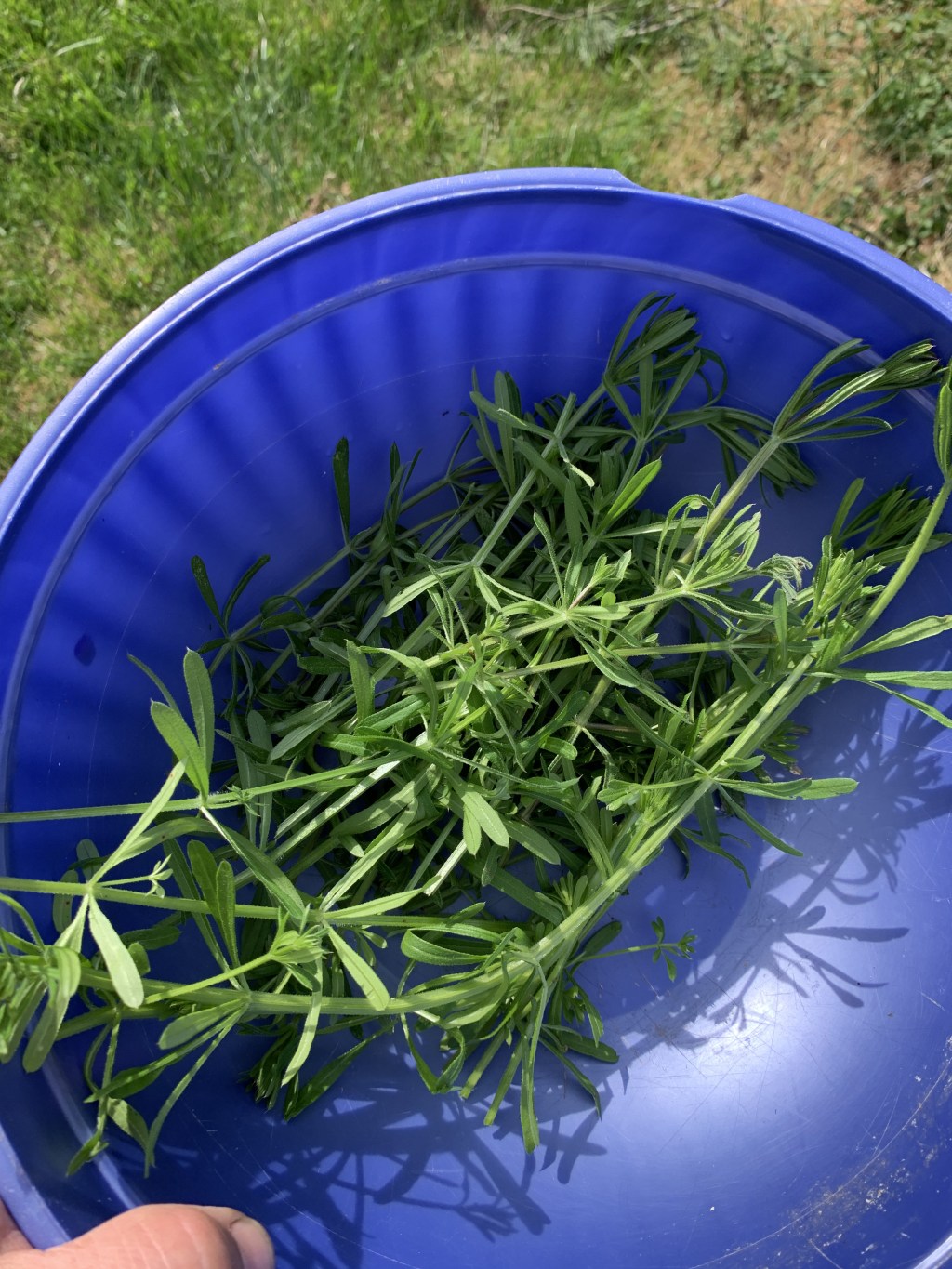
It’s that time of year again-cleavers are popping up everywhere! What started as a small patch at the back of our property last year has now exploded into a lush green carpet, stretching far beyond what we could ever use. We’re even finding cleavers sneaking into flower beds around the house. With such abundance, it’s officially time to start harvesting and making the most of this remarkable spring herb.
A Brief History of Cleavers
Cleavers (Galium aparine)-also known as goosegrass, stickyweed, or “bedstraw”-has a long and storied history. Its name comes from its clinging nature, thanks to tiny hooked hairs on the stems and leaves that latch onto anything that passes by. Ancient Greeks called it Philanthropon, referencing its habit of clinging, while in Anglo-Saxon times it was known as “hedge rife,” meaning a taxgatherer or robber, for the way it “collects” as it grows.
Historically, cleavers was used for more than just herbal medicine. Greek shepherds and, later, Swedes used its stems to make sieves for straining milk. The seeds have even been roasted as a coffee substitute. But perhaps its greatest legacy is as a cleansing spring tonic, valued by herbalists and foragers for centuries.
Medicinal Benefits of Cleavers
Cleavers is best known as a gentle, effective lymphatic tonic. It helps stimulate and cleanse the lymphatic system, which is crucial for detoxifying the body, reducing swelling, and supporting immune health. Its cooling, diuretic properties help flush excess fluids and toxins through the urinary tract, making it useful for urinary tract infections, kidney health, and reducing water retention.
Cleavers also offers:
Anti-inflammatory and antioxidant effects: Soothes inflamed tissues and helps protect against oxidative stress.
Skin support: Used for eczema, acne, and other hot, irritated skin conditions.
Digestive and liver health: Traditionally used to stimulate digestion and support liver function.
Immune support: By moving lymph and clearing stagnation, cleavers helps the immune system respond more efficiently.
How We’re Using Cleavers This Year
With so much cleavers at our disposal, we’re making a daily cleaver tonic-a simple, refreshing way to enjoy its benefits all spring long.
If you have a juicer: Juice fresh cleavers, mix with water, and drink daily for a vibrant green tonic.
Our method (no juicer needed):
1. Harvest: Pick fresh, young cleavers-enough to fill your blender.
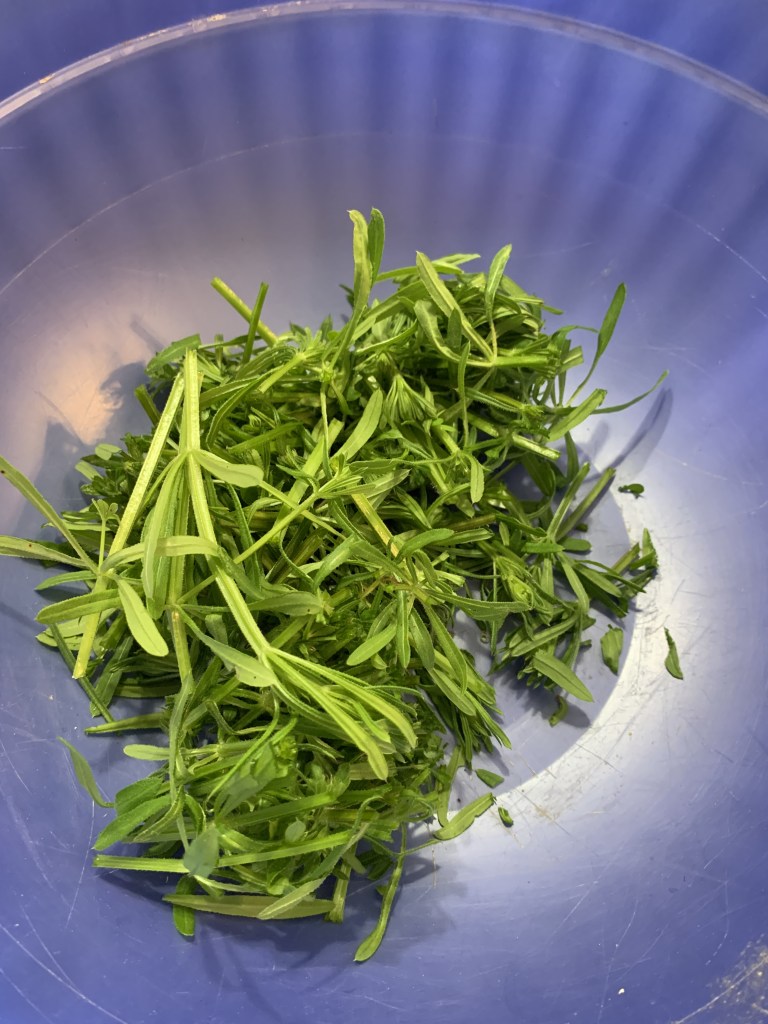
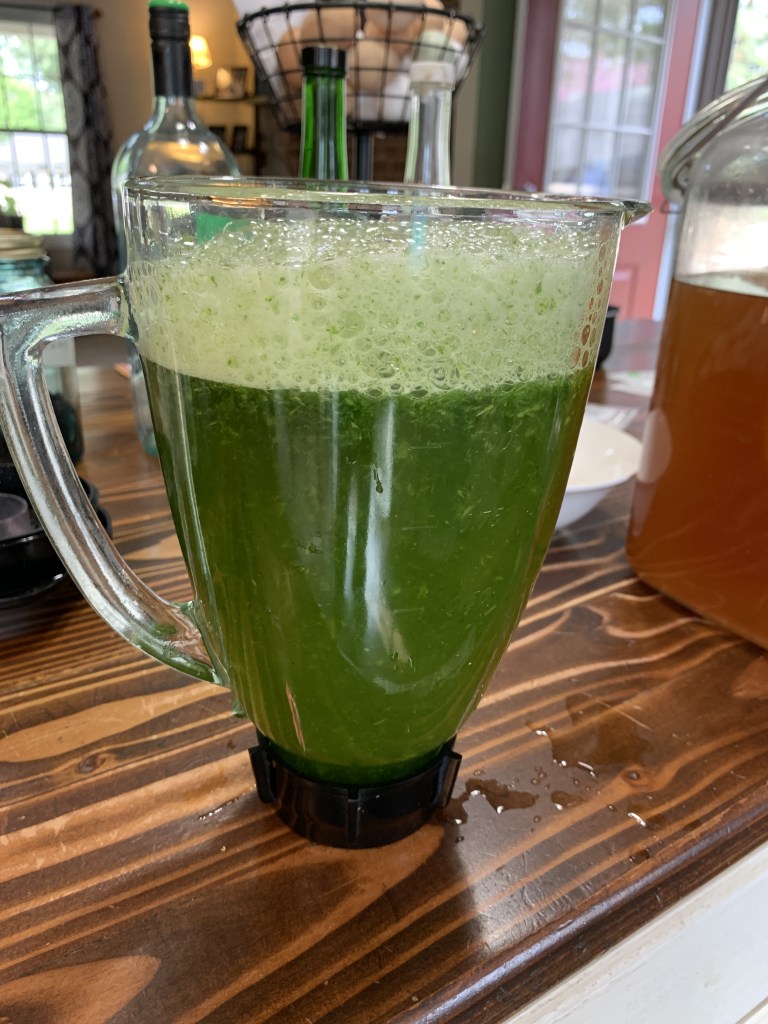
2. Blend: Add the cleavers to the blender, cover with water, and pulse to roughly chop.
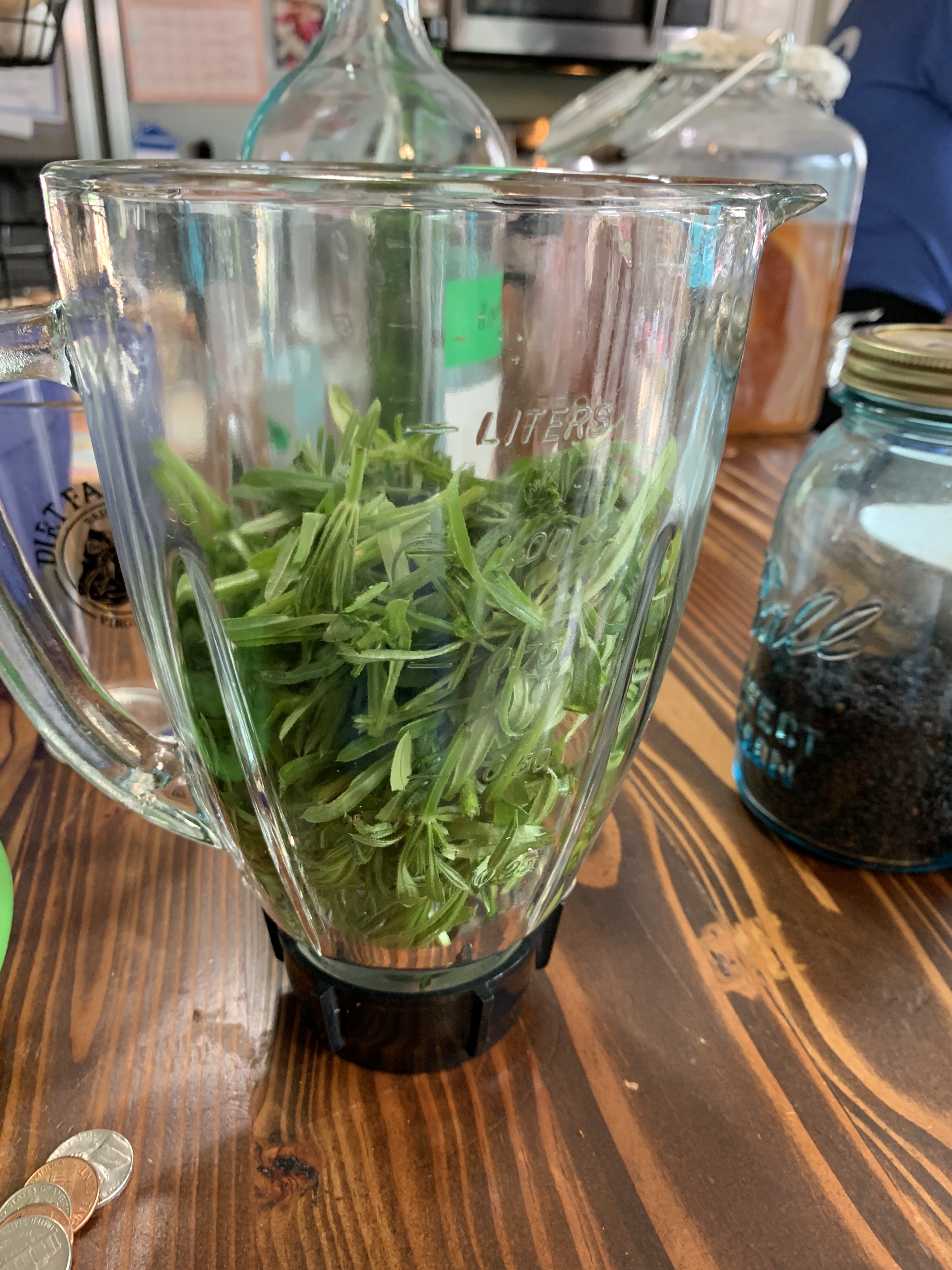
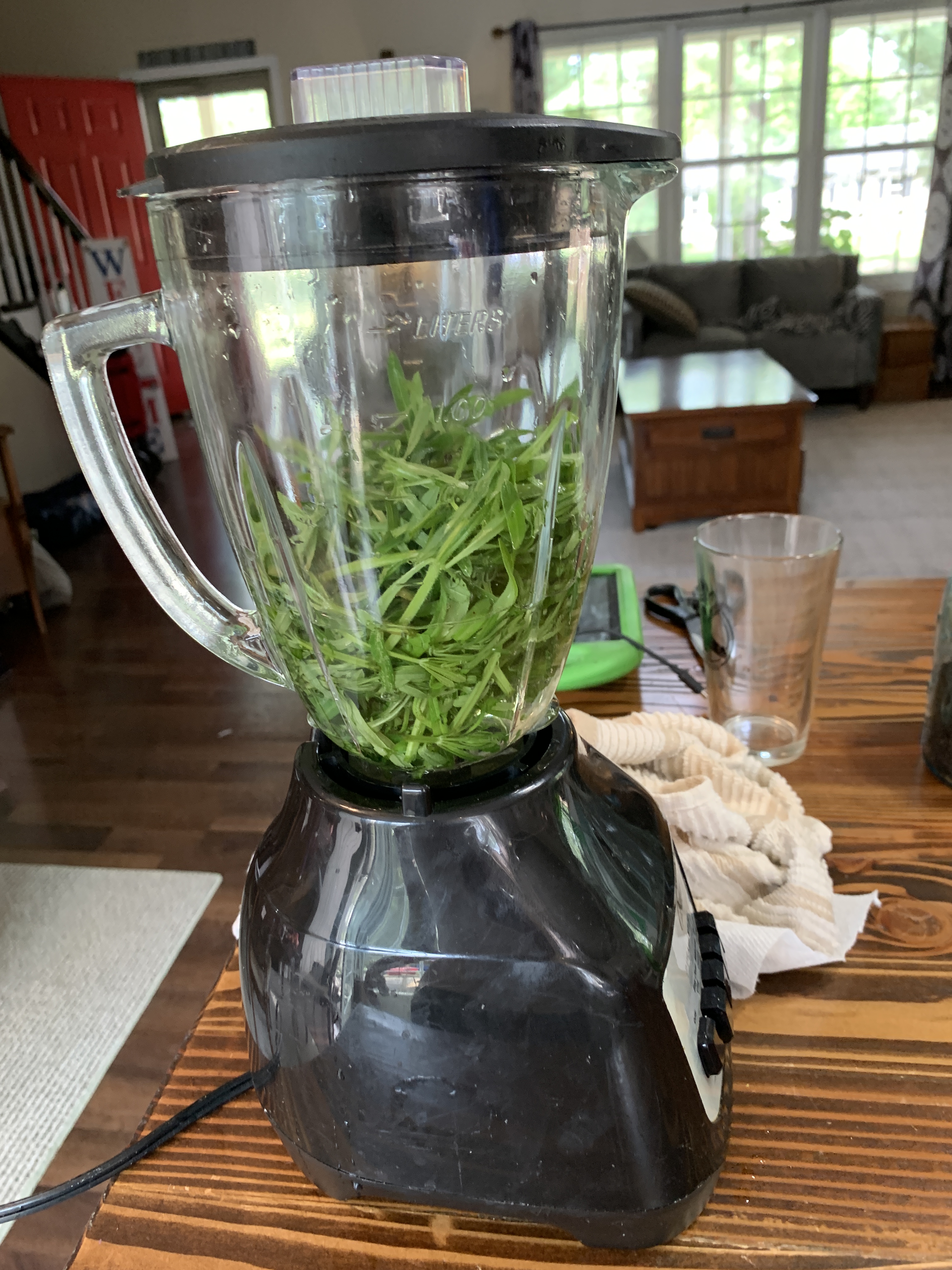

3. Infuse: Top up the blender with more water, then let the mixture sit in the fridge for at least 24 hours.
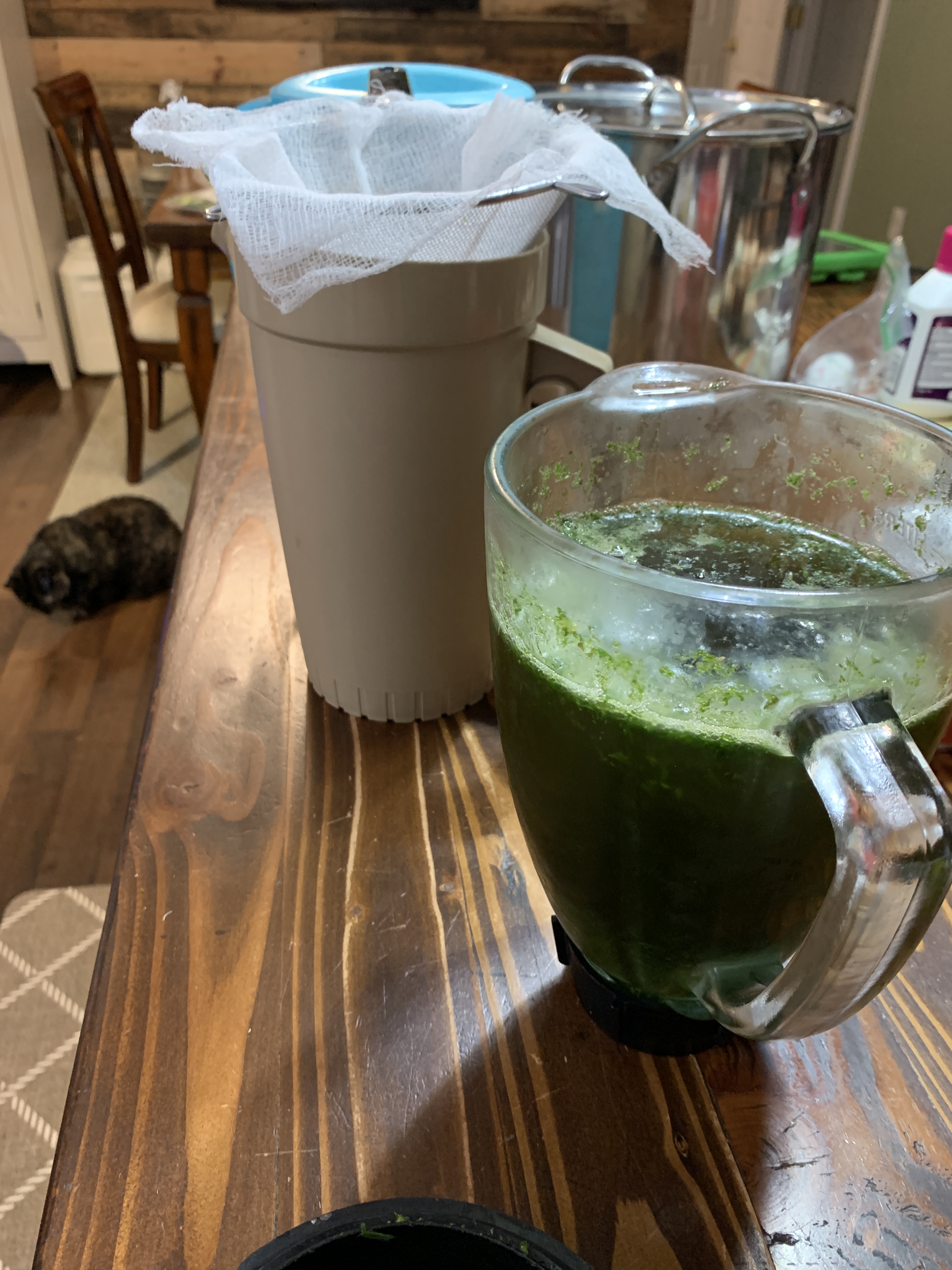
4. Strain: The next day, strain the liquid through cheesecloth, squeezing out as much as possible.

5. Store: Pour the cleaver water into a pitcher. Each day, pour yourself a half glass, top up with plain water, and enjoy as a daily tonic.
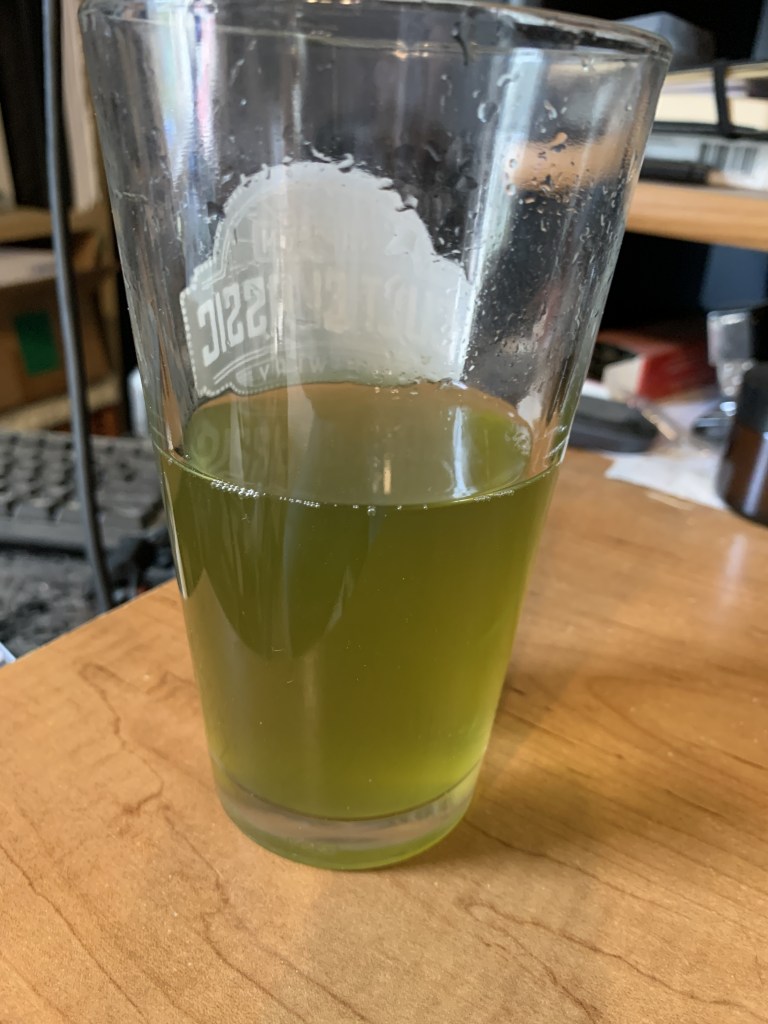
The taste is mild and refreshing-somewhere between cucumber and pea shoots-and it’s a perfect way to support your body’s springtime detox.
Preserving for Later
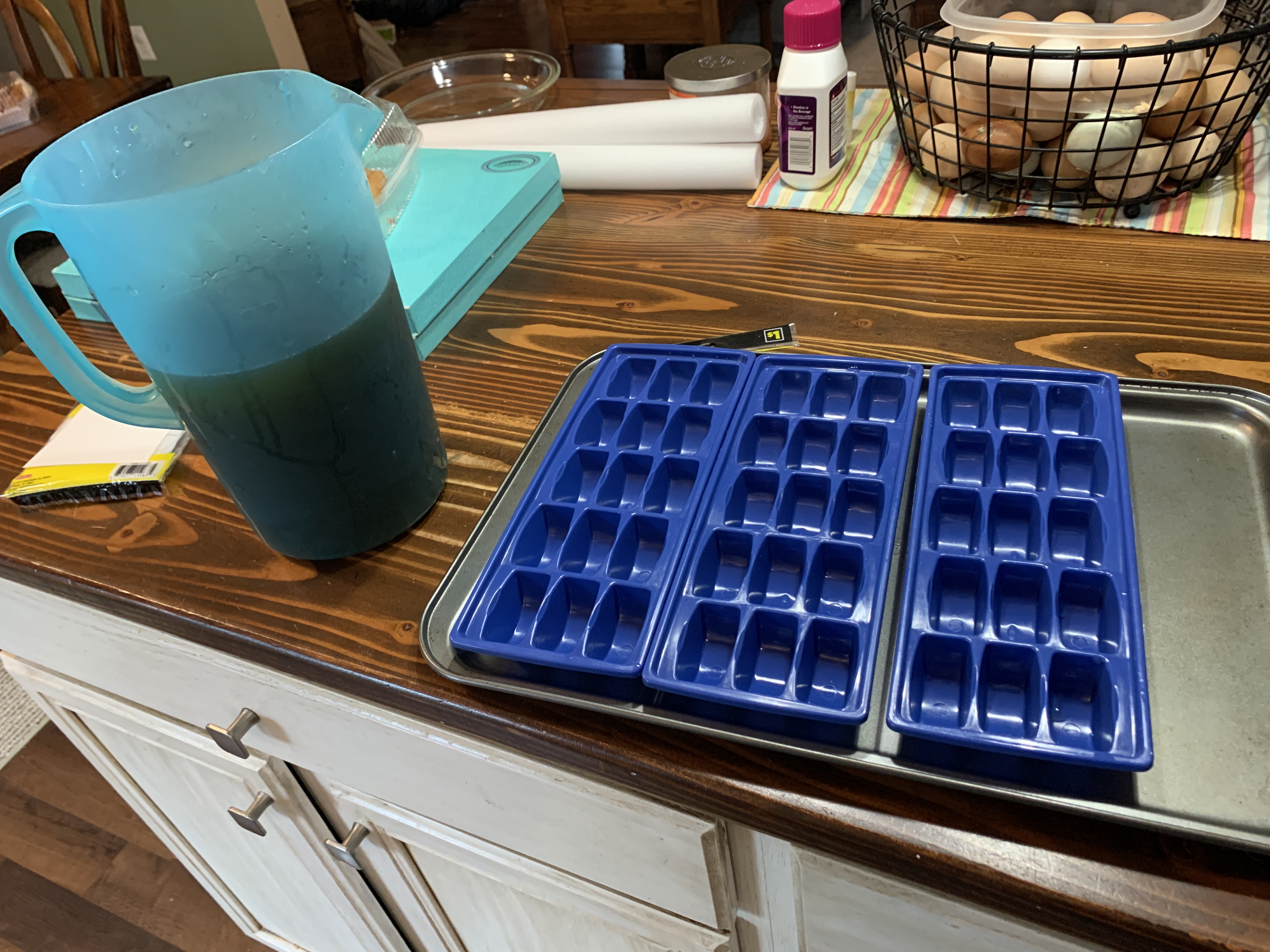
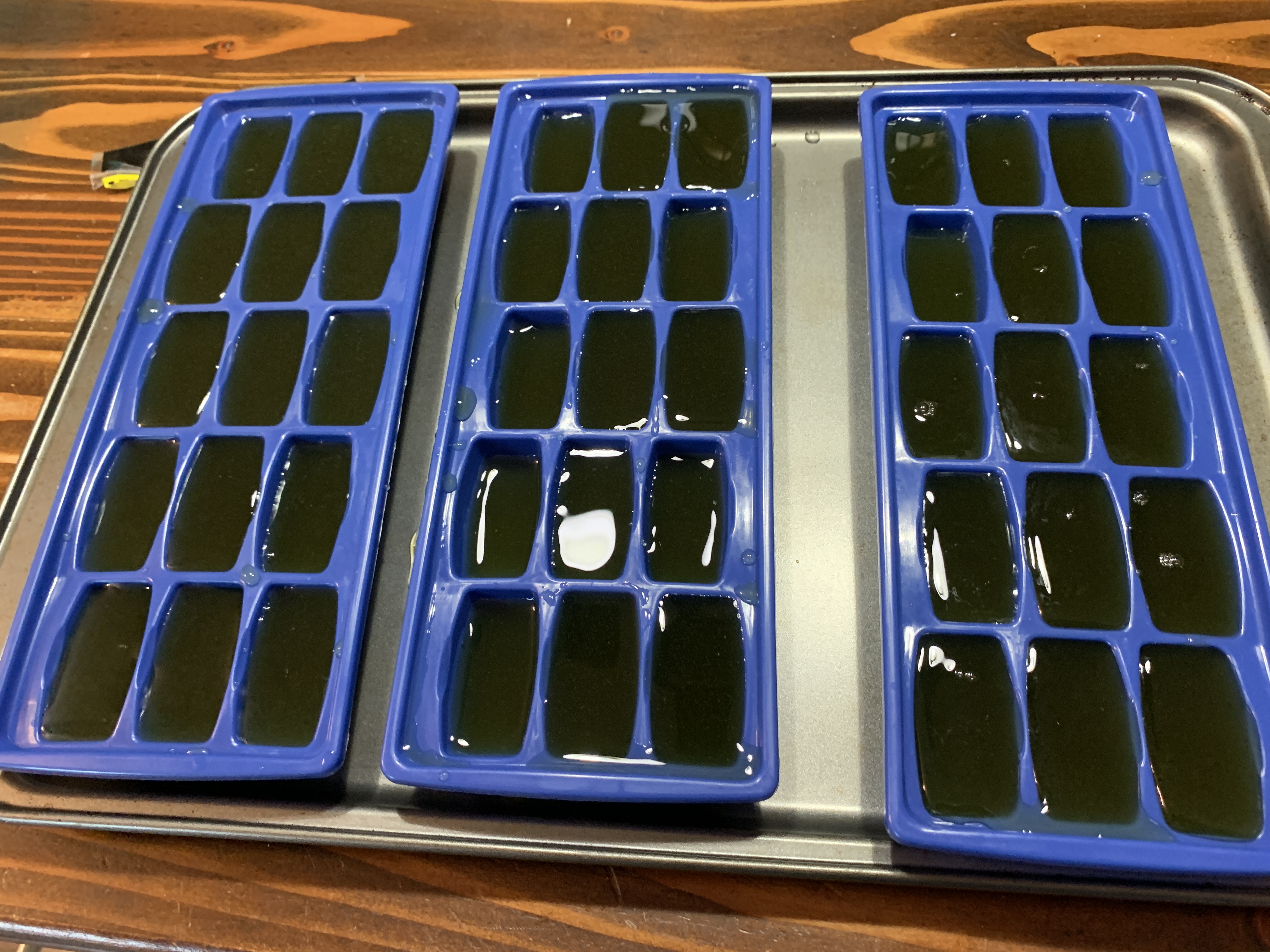
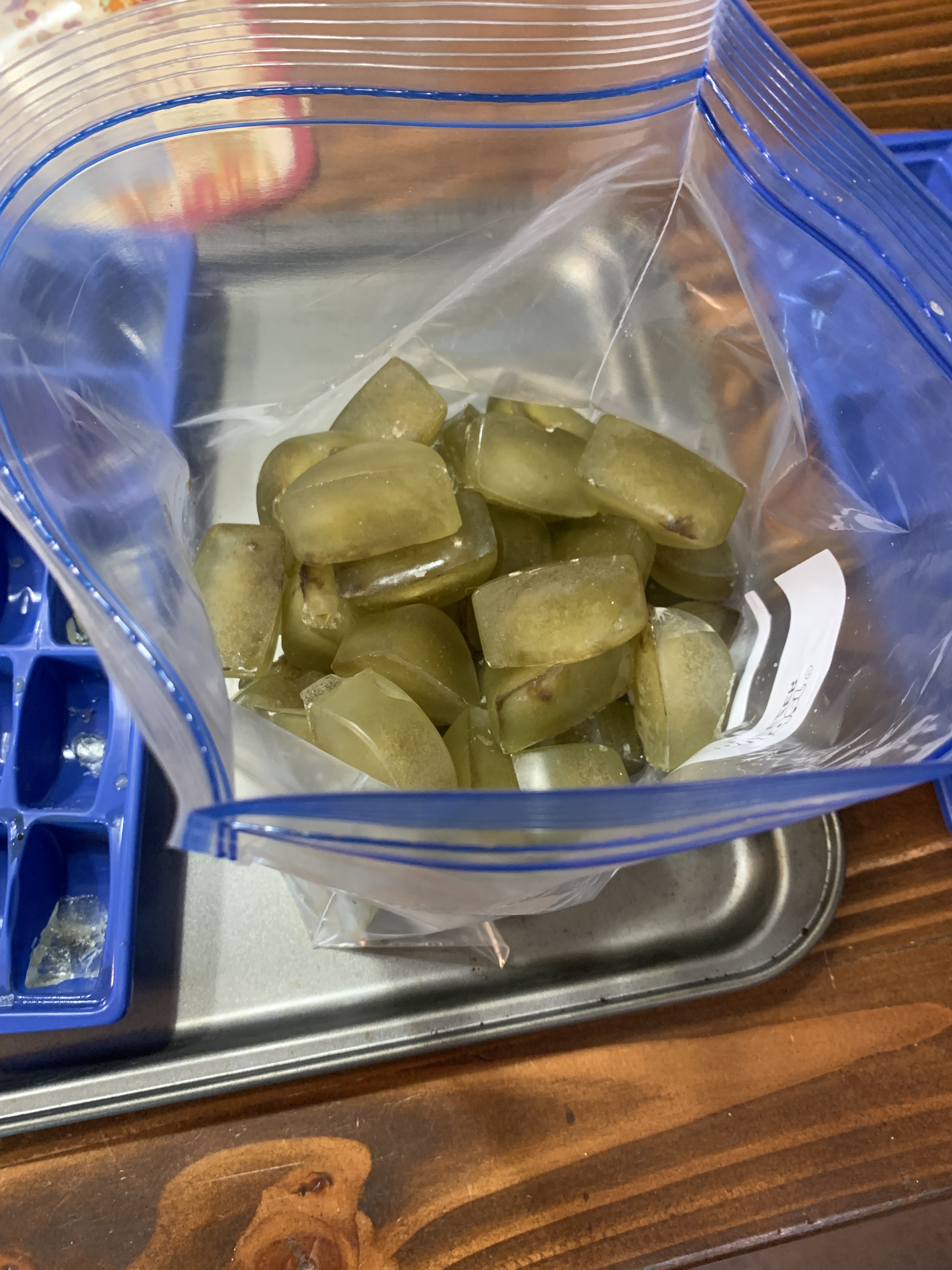
To make the most of our harvest, we’re freezing batches of the cleaver tonic in ice cube trays. Later in the summer, whenever we need a boost, we just pop a cube or two into a glass of water for an instant herbal refresher.


Final Thoughts
Cleavers is the ultimate spring herb-abundant, easy to harvest, and packed with gentle cleansing power. Whether you’re juicing, blending, or freezing, it’s a wonderful way to reconnect with the rhythms of the season and support your body’s natural renewal. If you’ve never tried cleavers before, now is the perfect time to start harvesting. Let the sticky season begin!
Happy foraging and cheers to your spring health!
Also, please stop by our facebook page and give us a “like” there. We post some additional content there, and we’re always happy to respond and answer any questions you may have! You can also find me on GAB, https://gab.com/jungerer!



 RJ Homestead
Leave a comment