
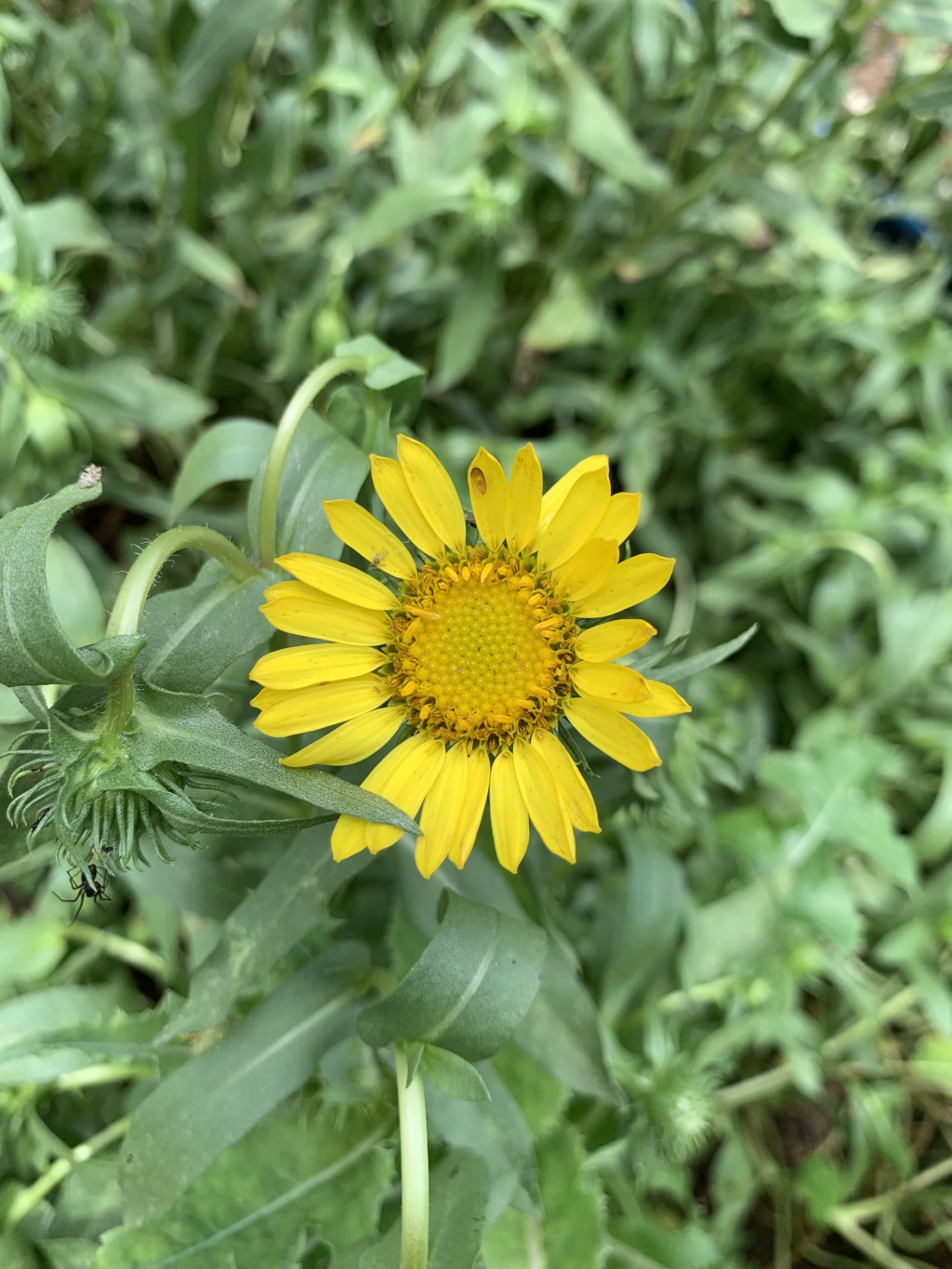
This year, a new green friend has truly blossomed in our medicinal garden: Curlycup Gumweed (Grindelia squarrosa). After planting seeds last year, we’re thrilled to see its unique, resinous yellow flowers finally opening, marking its official welcome into our herbal apothecary. This fascinating plant, often considered a roadside “weed,” is now a prized addition, especially as we begin harvesting its potent medicine to make tinctures.
A Glimpse into Curlycup Gumweed’s Past
Native to western and central North America, Curlycup Gumweed has a rich history of medicinal use long before modern science. Indigenous peoples and early Spanish New Mexicans recognized its therapeutic properties. For instance, Spanish New Mexicans would prepare an extract by boiling flower buds for kidney problems . Native American tribes utilized its gummy secretions to alleviate asthma, bronchitis, and colic, and a boiled extract of leaves and flowering tops was used for saddle sores and raw skin . It was also consumed as a tea for coughs, as an expectorant, and to treat dizziness . The crushed flowers were even used in poultices for poison ivy, and its sticky sap was chewed as gum .
This widespread traditional use led to its brief appearance in the United States Pharmacopeia from 1890 to 1910, where it was noted for its bronchodilator properties . The genus name Grindelia itself honors European botanist D.H. Grindel .
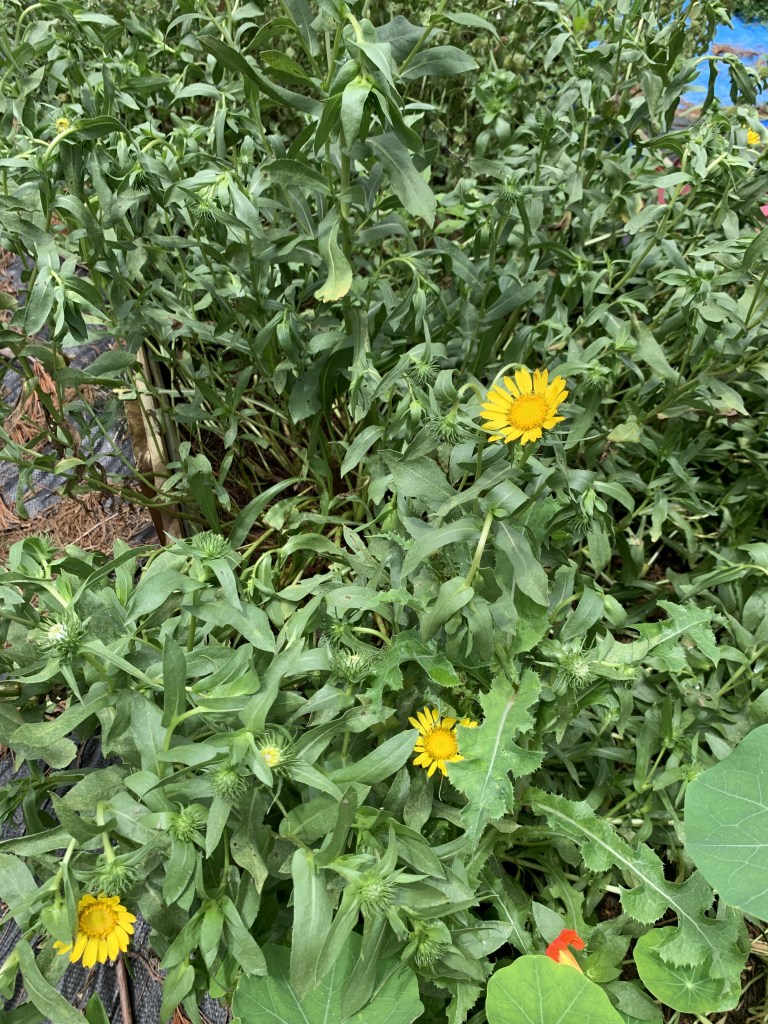
The Healing Power of Curlycup Gumweed
Curlycup Gumweed is most celebrated for its profound effects on respiratory health, though its benefits extend to various other ailments:
Respiratory Support: This herb is a true ally for the lungs. Its expectorant properties help loosen and expel mucus, making it effective for dry, hacking, or lingering coughs, as well as conditions like asthma, bronchitis, and whooping cough . It acts as a bronchial dilator, helping to open airways, and its anti-spasmodic qualities can calm coughs . Recent studies further support its traditional use for cold-related diseases by demonstrating its ability to modulate pro-inflammatory functions in respiratory tissues .
Skin Affections: Historically, gumweed has been a go-to remedy for various skin issues. It’s applied externally as a wash or poultice for rashes, itching, insect bites, stings, and sores, particularly those from poison ivy and other allergic reactions .
Immune Boosting: With its powerful microbial-balancing compounds, Grindelia squarrosa helps fight against harmful microbes and supports the body’s natural immune response . It can be incorporated into a wellness routine as both a preventative measure and a remedy when feeling unwell .
Other Traditional Uses: Traditionally, it has been used for kidney problems and urinary infections, stomach ulcers, and to soothe inflammation . Some historical accounts also mention its use for intermittent fevers, malarial infections, and digestive support .
Harvesting Our Sticky Harvest
The best time to harvest Curlycup Gumweed is when its showy yellow flowers are in full bloom, typically from July through September . The plant’s distinctive “curly cups” and leaves are covered in a sticky, gummy resin, which is where its medicinal properties primarily reside . When harvesting, we focus on collecting the top two-thirds of the plant, including stems, leaves, and flowers, as these parts contain the most medicine .
It’s important to choose a harvesting location away from roadsides or other polluted areas, even though the plant often thrives in disturbed ground . While a powerful herb, it’s worth noting that gumweed can concentrate selenium in certain soils, which can be toxic, and as a member of the sunflower family, some individuals may have allergic reactions .
Making Our Own Curlycup Gumweed Tincture
This year, we’re making tinctures from our fresh Curlycup Gumweed harvest. Tincturing is an excellent way to extract and preserve the medicinal compounds, creating a potent and easily portable medicine.
Ingredients:
Fresh Curlycup Gumweed (stems, leaves, and flowers). Due to the high resin content, Gumweed does not dry out well.
High-proof alcohol (Everclear or strong vodka – higher proof is recommended for resinous plants like gumweed to ensure maximum extraction). We’re using 80proof since that’s all we have, but we’ll let this sit for 6 months to a year to extract as much as possible from it.
Instructions:
Harvest and Prepare: Collect fresh Curlycup Gumweed, focusing on the top two-thirds of the plant with as many open flowers as possible, ensuring it’s from a non-polluted location . Gently wash the plant material and pat it dry; it doesn’t need to be perfectly dry as it will be submerged in liquid again .
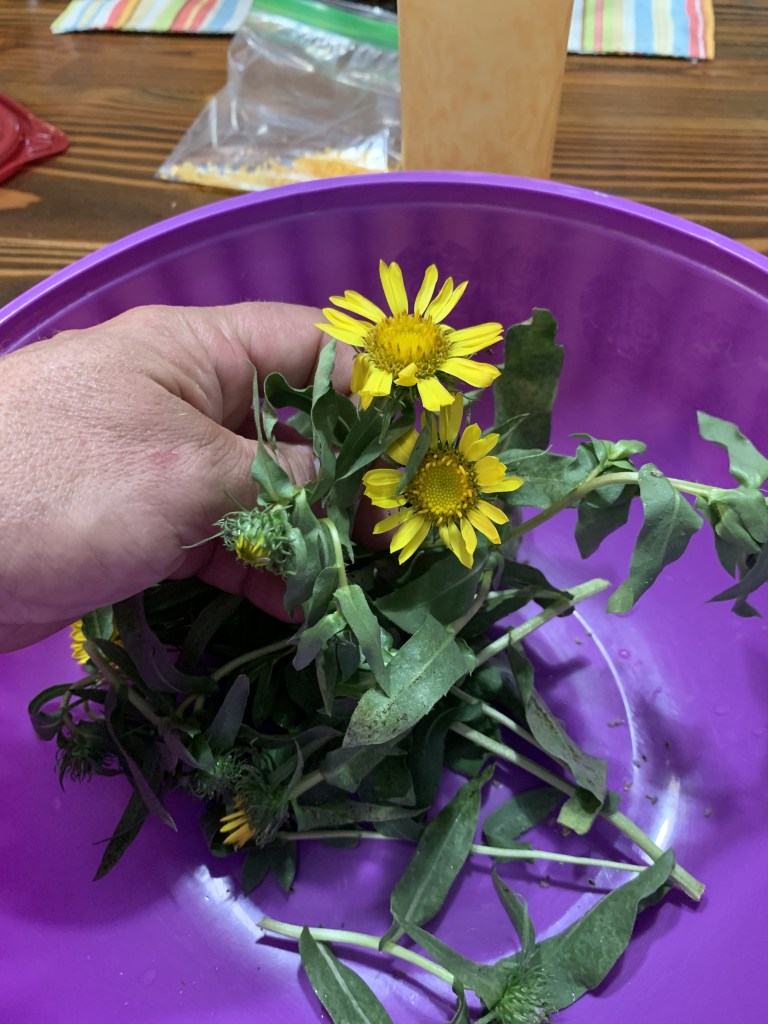
Chop: Chop the fresh plant material into roughly 1-inch pieces. This increases the surface area for extraction .
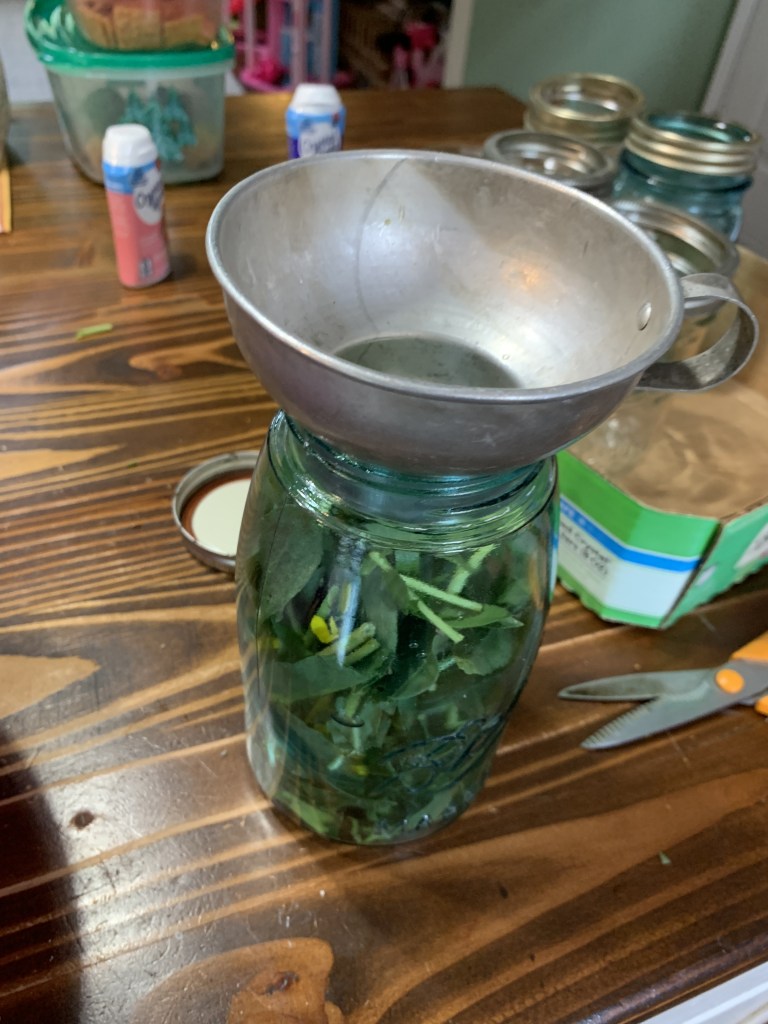
Pack the Jar: Place the chopped gumweed into a clean glass jar. Fill the jar between two-thirds and three-quarters full with the plant material. This leaves enough space for the alcohol to fully extract the medicine .
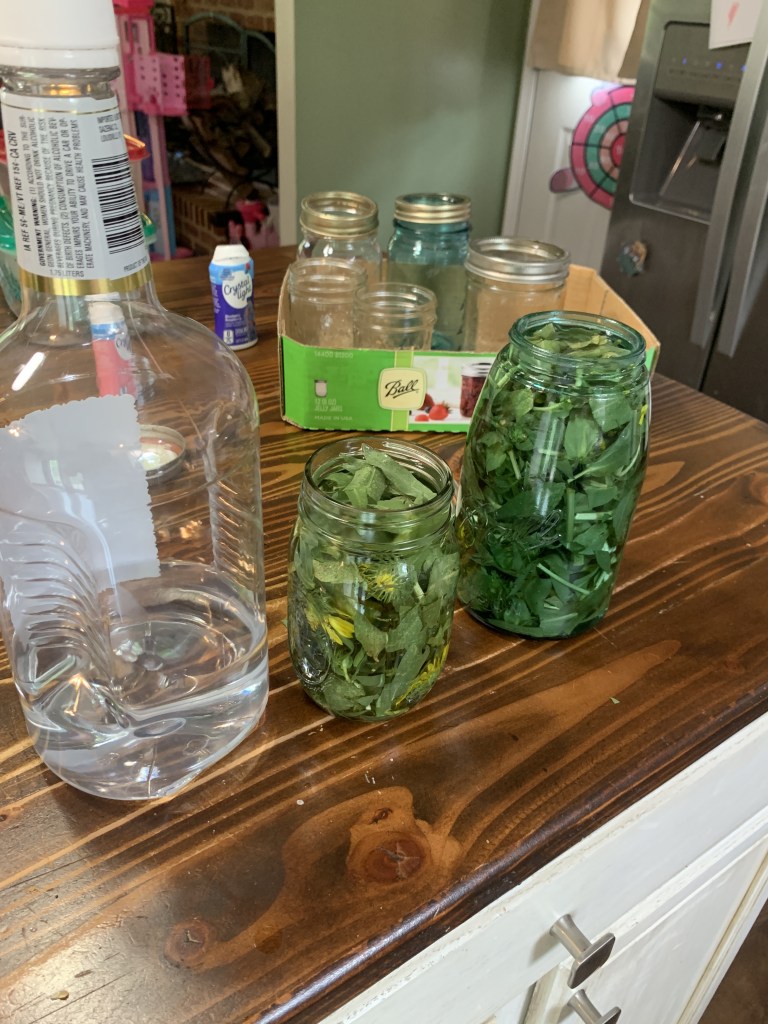
Add Alcohol: Pour the high-proof alcohol over the plant material until it is completely submerged and the jar is full .
Macerate: Seal the jar tightly with a lid and place it in a cool, dark space .
Agitate Daily: Shake the jar gently every day to ensure the plant material remains saturated and to aid the extraction process .
Steep: Allow the mixture to macerate for at least 6 weeks. Some herbalists recommend steeping for up to 6 months for maximum potency . You’ll notice the liquid turning a vibrant emerald green within 24 hours .
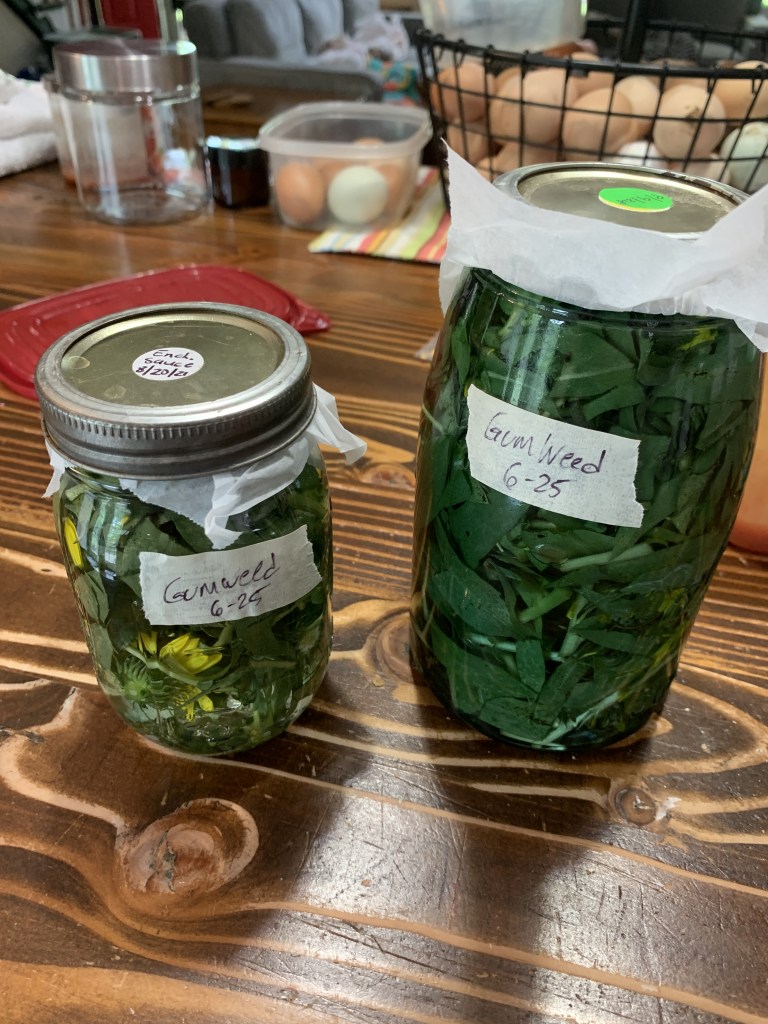
Strain: After the desired steeping period, strain the liquid from the plant material using a fine mesh strainer or cheesecloth, pressing out as much liquid as possible .
Store: Pour the finished tincture into dark glass dropper bottles and store in a cool, dark cupboard .
A helpful note: This tincture will stain things bright green! Clean up any spills instantly, as the green stain can be very difficult to remove, especially from porous surfaces .
We are incredibly excited to be incorporating Curlycup Gumweed into our home apothecary this year. Its potent respiratory and immune benefits make it a valuable addition to our natural remedies, and the process of making our own tinctures feels deeply rewarding. Here’s to exploring the healing power of the plants in our own backyard!
Also, please stop by our facebook page and give us a “like” there. We post some additional content there, and we’re always happy to respond and answer any questions you may have! You can also find me on GAB, https://gab.com/jungerer!

 RJ Homestead
Leave a comment