
Not every project we tackle here at the homestead is related to the gardens, the animals, or filling the apothecary jars. Every now and then, we get to do something just for fun.
This is one of those projects.
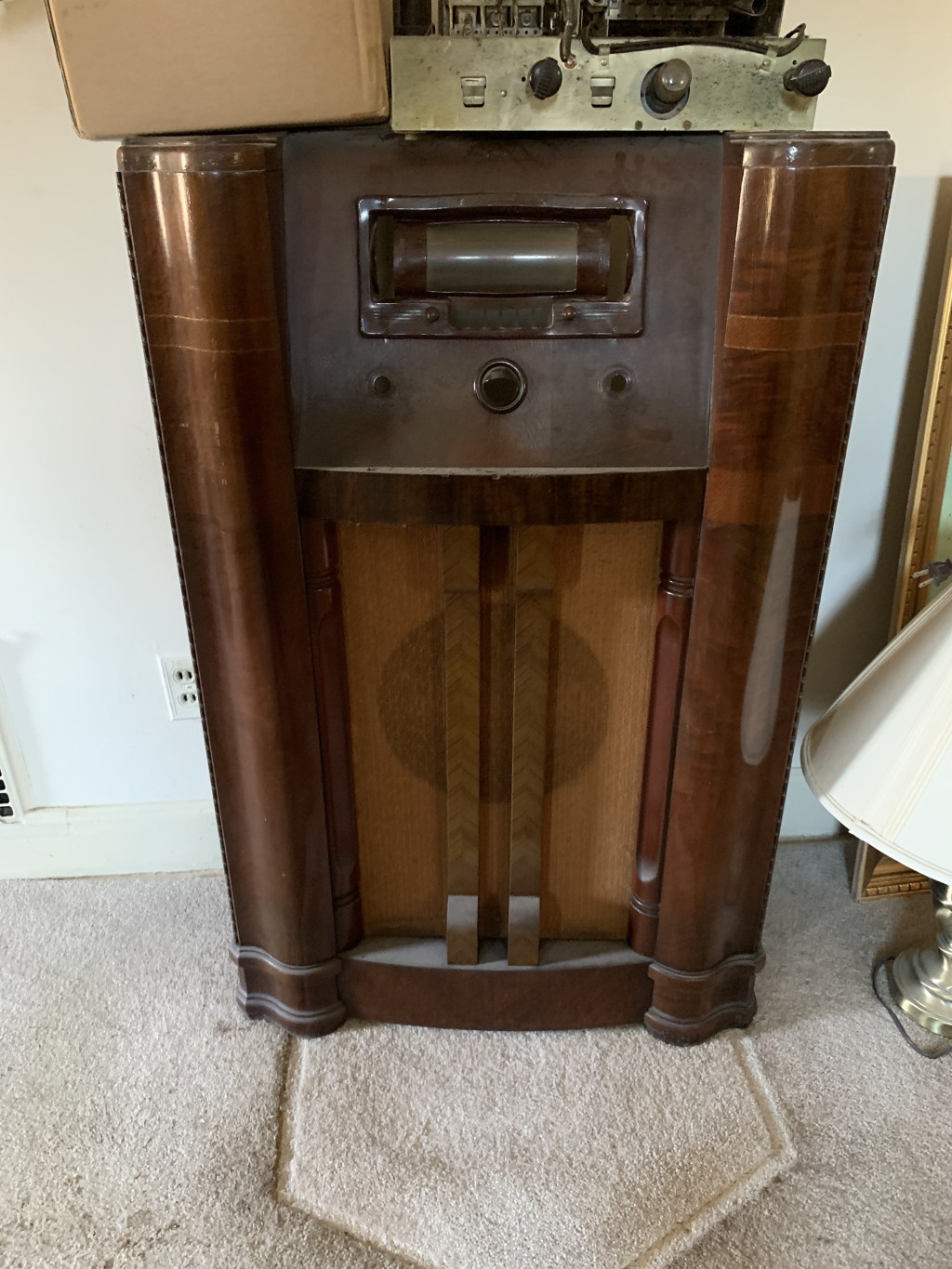
Life has its seasons, and unfortunately, Rebecca’s aunt recently reached that point where living alone wasn’t safe anymore, and she had to move into a care facility. It’s a bittersweet transition that many of us know well. The family gathered to help clean out her house, sorting through decades of memories. In the process, we ended up with a beautiful piece of history: an old floor-standing radio.
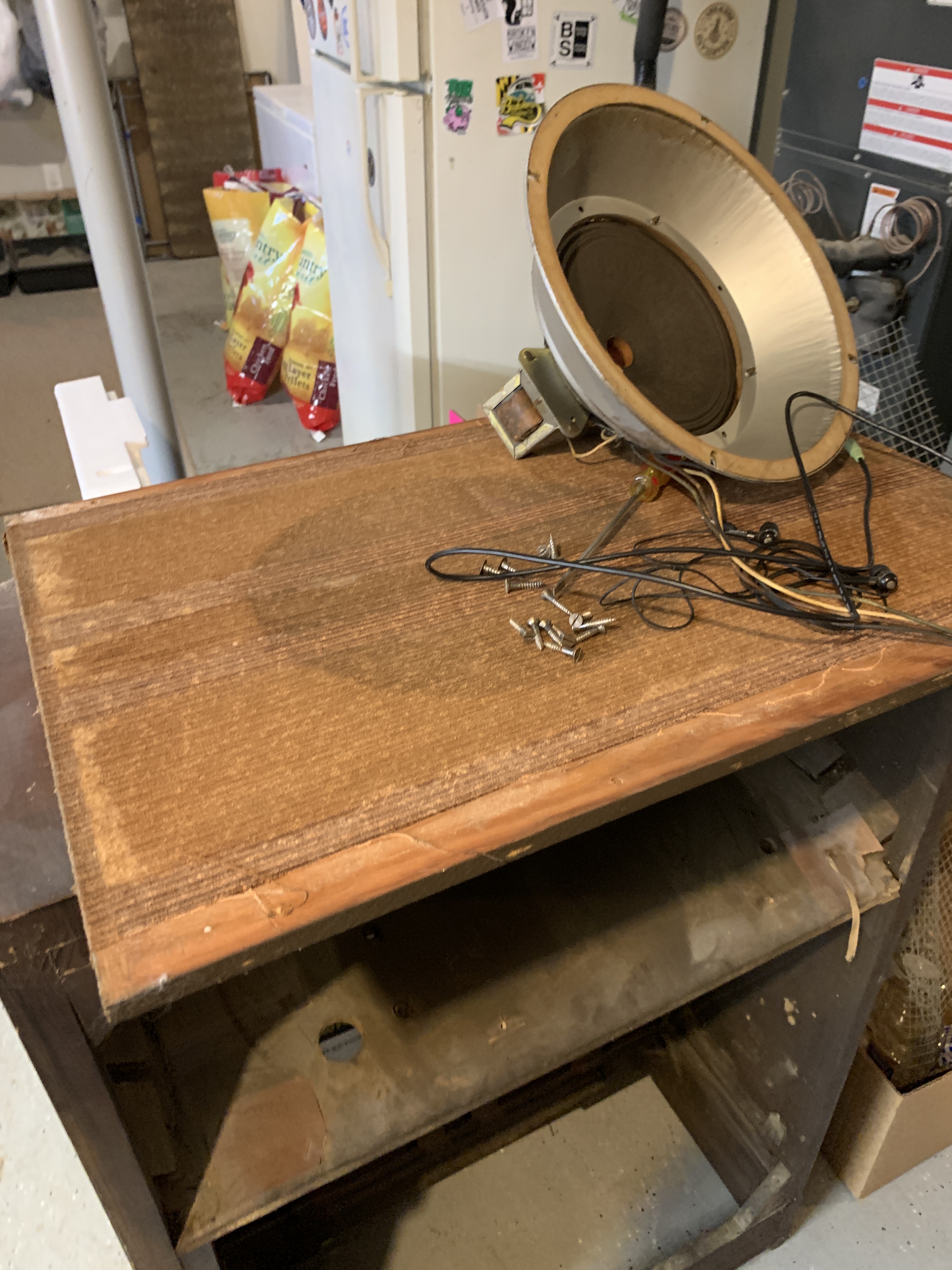
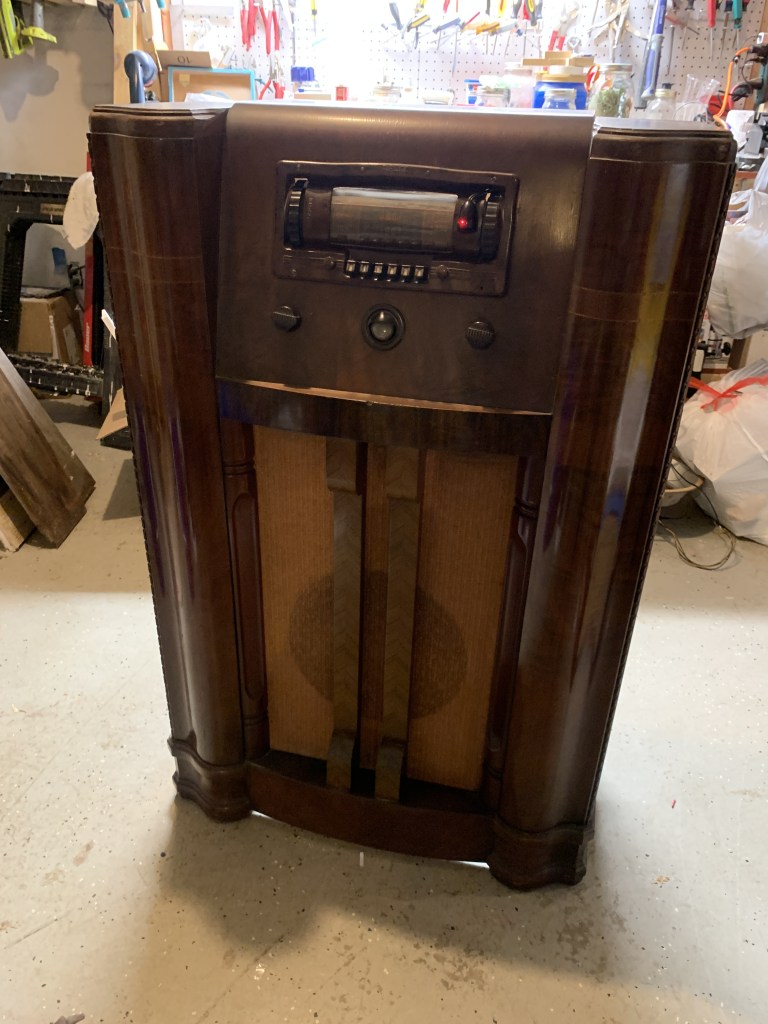
It stands roughly chest-high, a gorgeous wooden sentinel from a different era. I believe it originally only picked up AM frequencies (though don’t quote me on that!), and the internal speaker had a date stamped right on the cone: 1939.
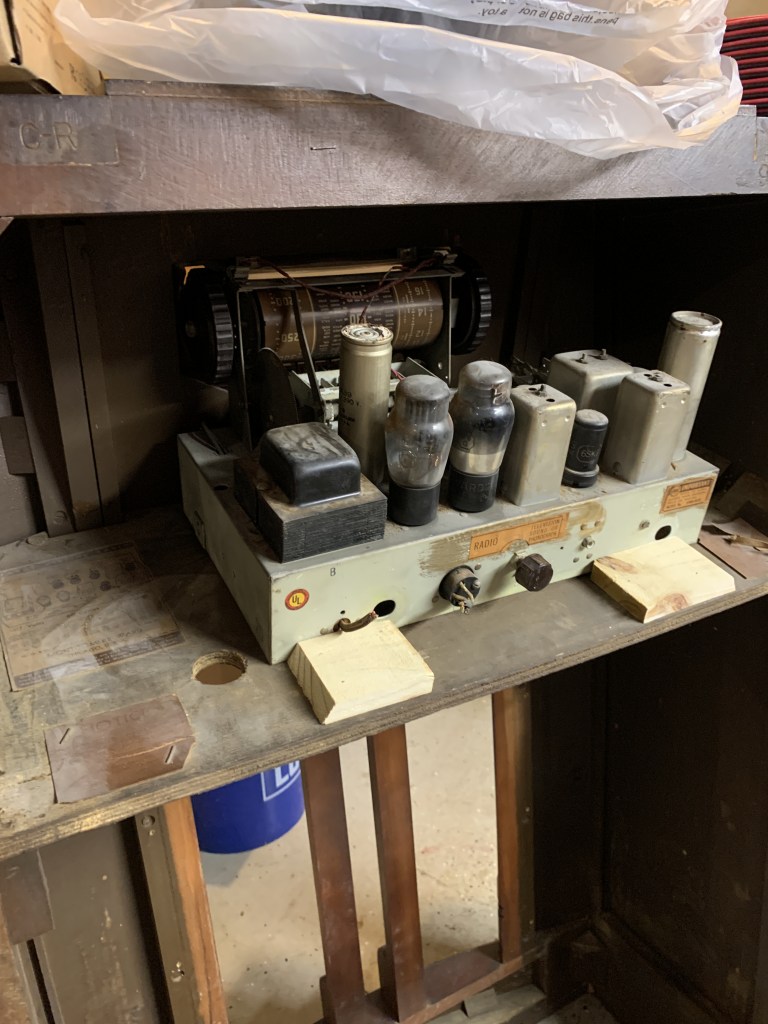
While the cabinet was in lovely shape, retaining that classic “old-timey” aesthetic we love, the insides were a different story. The old tube system and components were long past their prime. But we couldn’t bear to let it just sit there as a silent piece of furniture. We wanted to give it a voice again—but this time, with a modern twist.
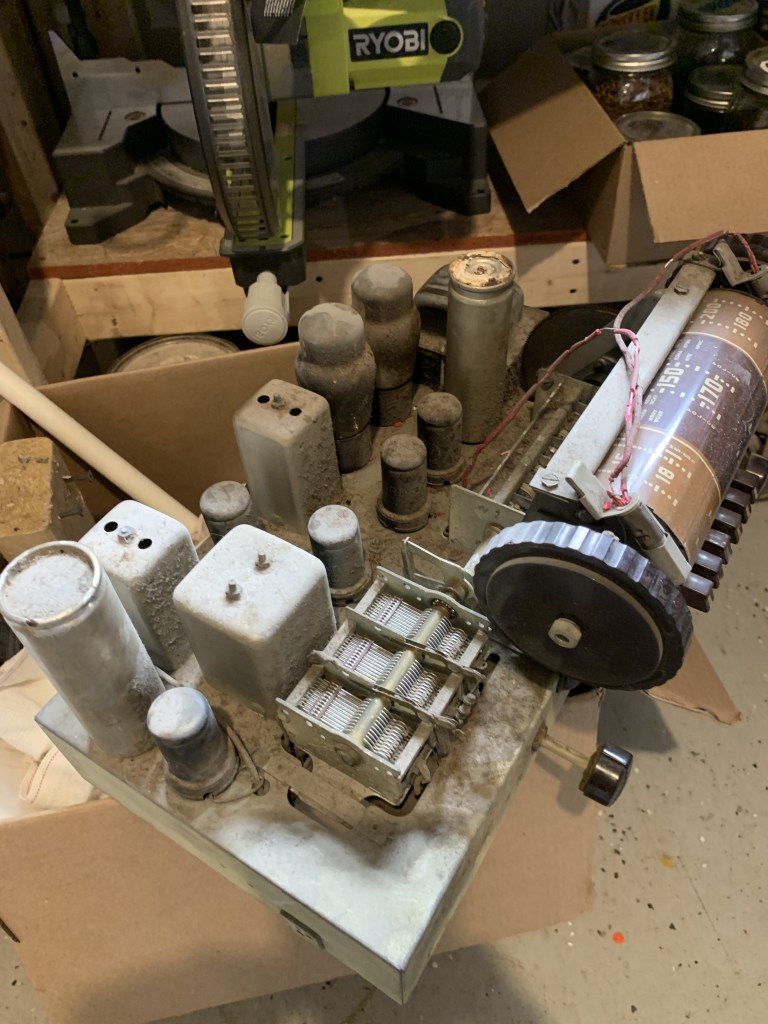
So, we decided to upgrade the internals to support stereo audio, Bluetooth, and FM radio, all while keeping the vintage charm intact. Here is how we turned this 1939 relic into our new basement sound system.
The Gear List 🛠️
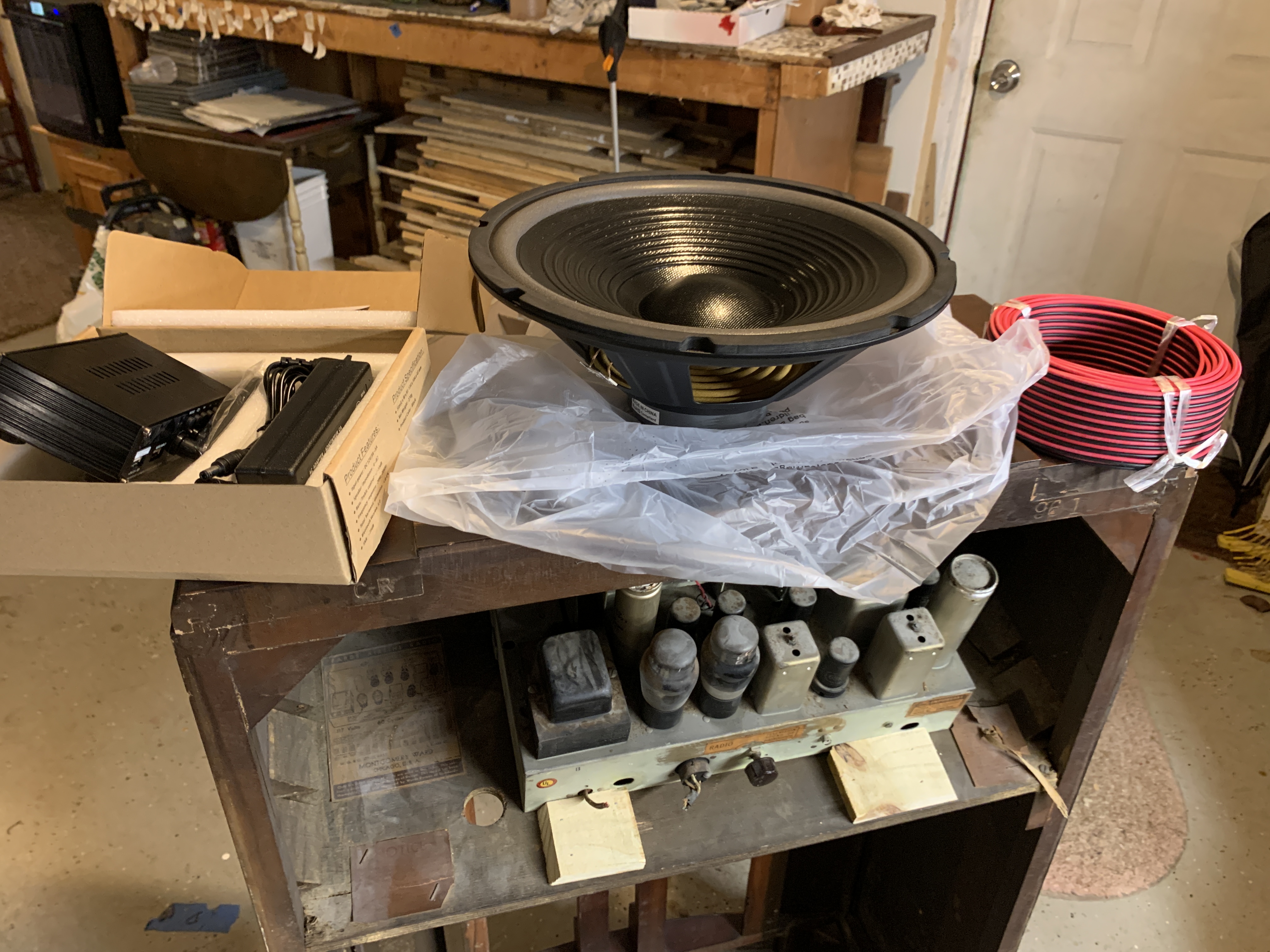
To make this happen without breaking the bank (or the cabinet), I picked up a few key items:
- A new high-quality speaker
- A mini Bluetooth amplifier
- Standard speaker cable
- An IR (Infrared) transmitter/repeater kit
The Restoration Process
1. The Great Clean-Up
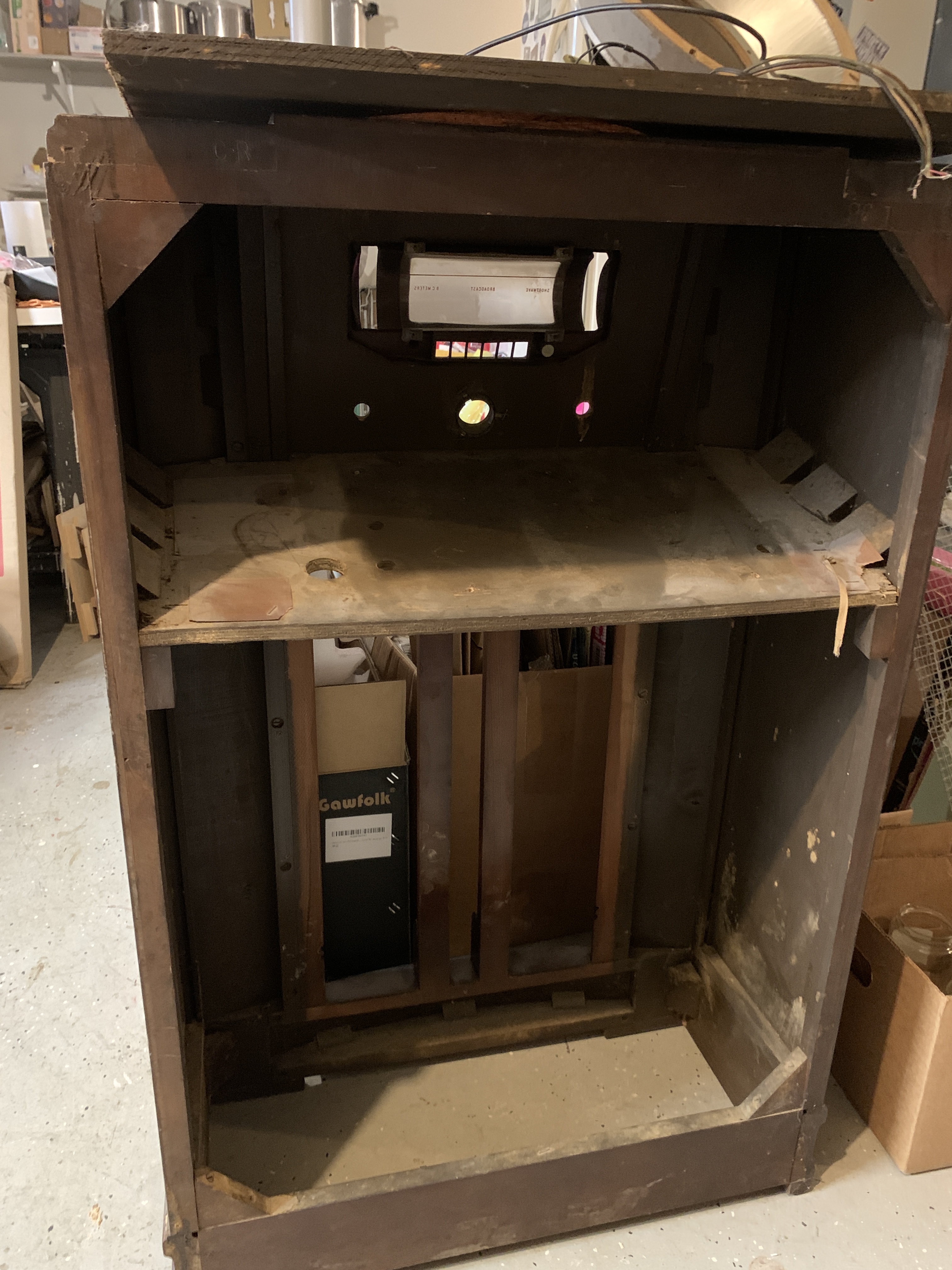
First things first: dust. Decades of it. I wiped down the entire cabinet, inside and out, carefully removing layers of buildup to reveal the wood grain underneath. It’s amazing what a simple wipe-down can do for a piece of furniture that has been sitting for years.
2. Preserving the “Face”
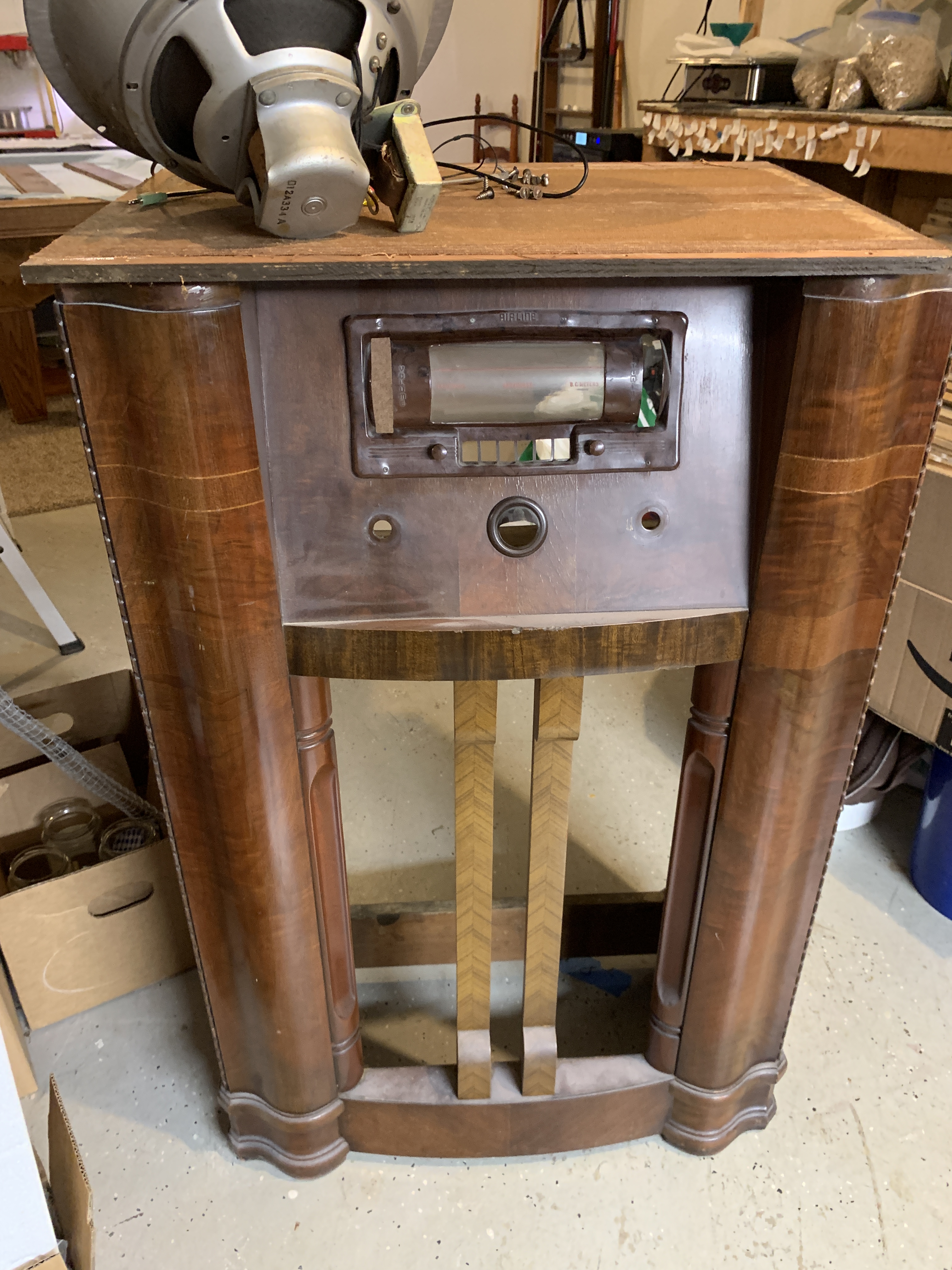
I pulled out the internal chassis and realized that all the dials, knobs, and instruments were physically connected to the main unit. Since we wanted the radio to look original, I carefully cleaned off the dust and mounted the old dials back in place. Even though they don’t control the new digital amp, the front of the radio still looks complete and authentic.
3. The Speaker Swap
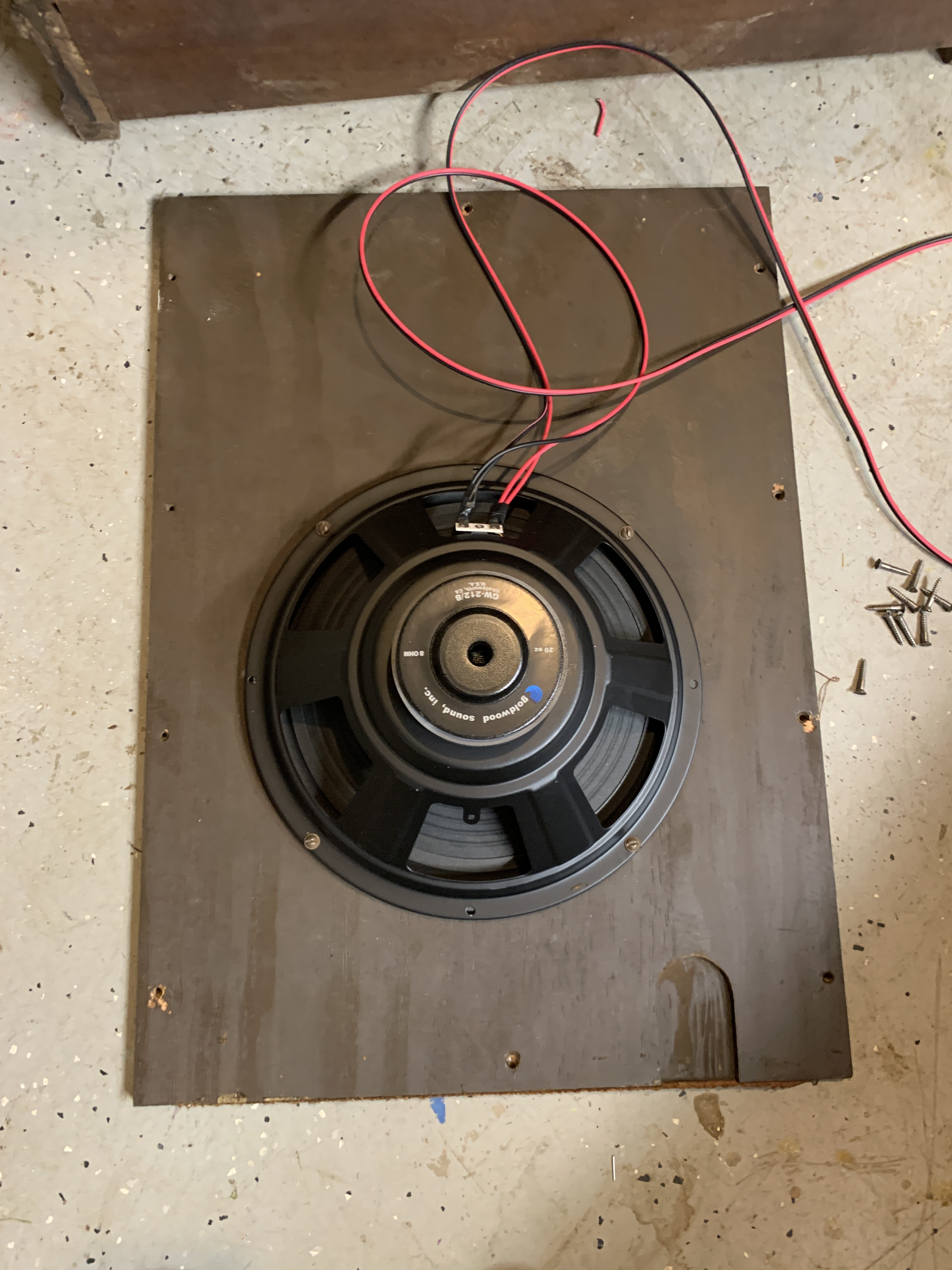
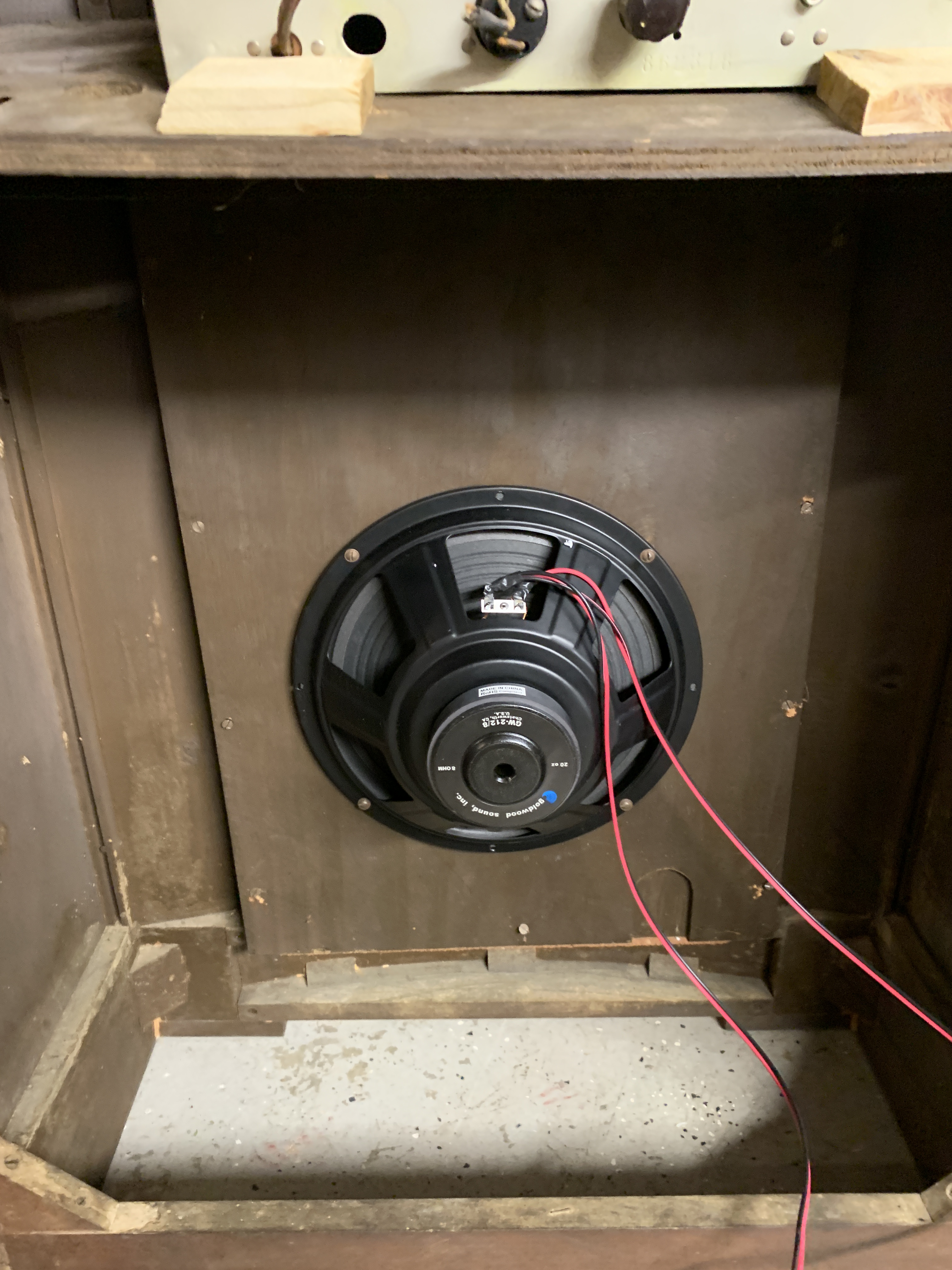
I pulled out the main speaker board to remove the 1939 speaker. I was nervous about the original fabric grille cloth, but it was actually in decent shape! I decided to leave it alone for now to keep that vintage texture. (I did bookmark a dealer online who sells retro speaker fabric, just in case we need to replace it down the road). I mounted the new speaker onto the board and slid it back in.
4. The “Brain” Transplant
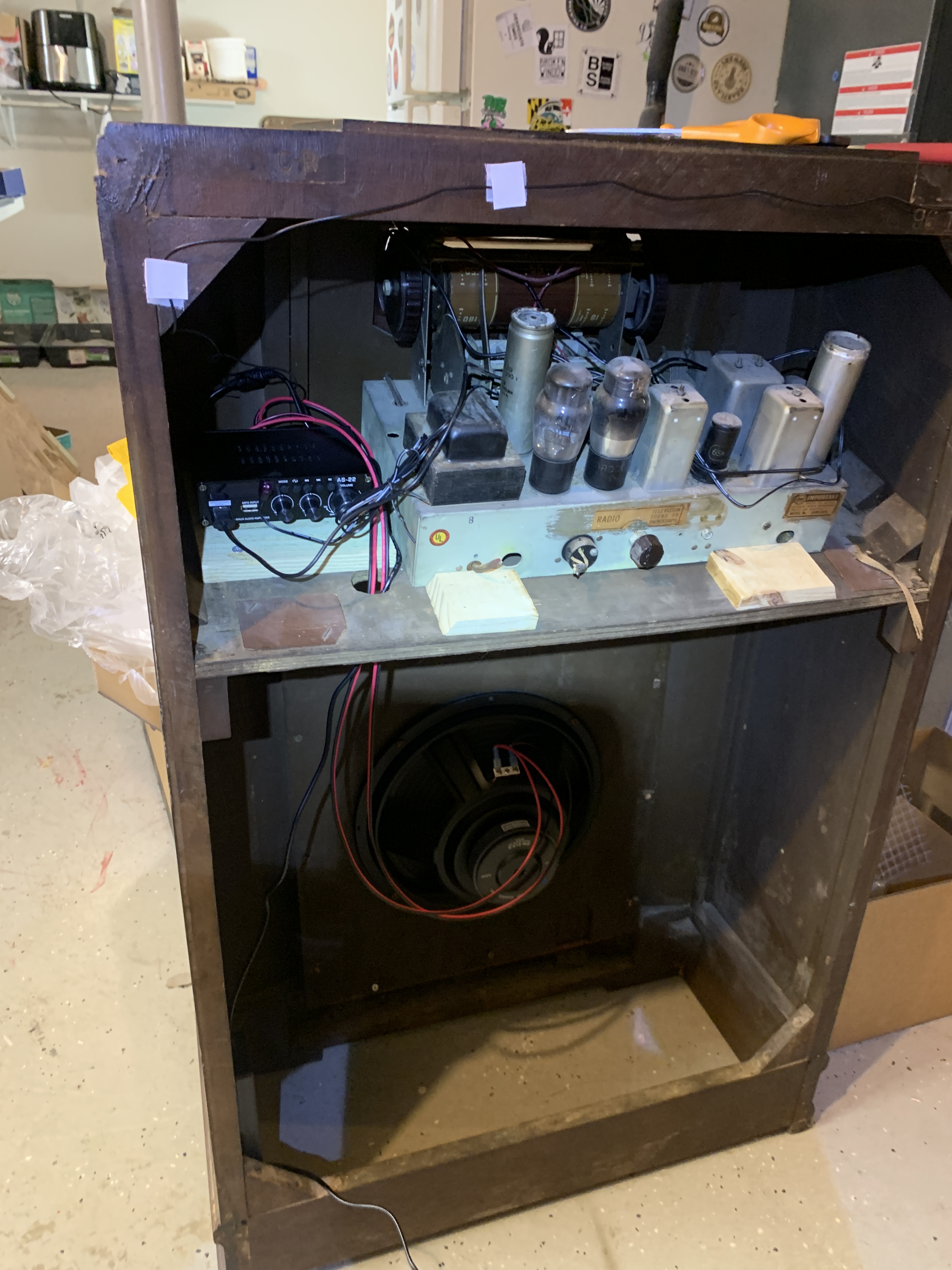
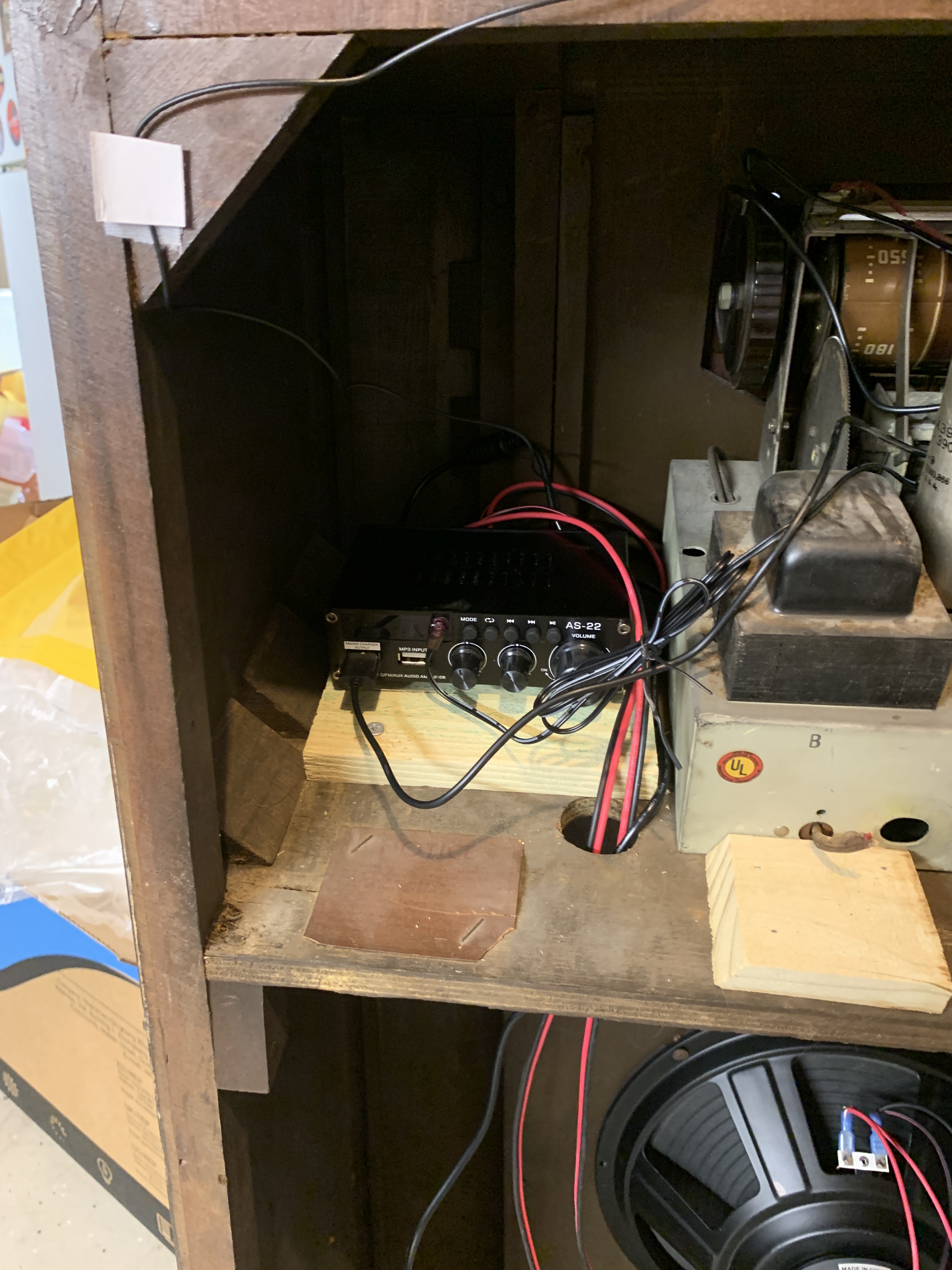
Next, I mounted the mini Bluetooth amp inside the cabinet and ran the speaker wire. This is where I hit a snag. The amp comes with a remote, but since the amp was now hidden inside a thick wooden cabinet, the remote signal couldn’t reach it.

5. Solving the Signal Issue
This is where the IR transmitter came in handy. I mounted a tiny, discreet sensor on the outside of the cabinet. This sensor catches the signal from the remote and “repeats” it to the amp hidden inside. Problem solved!
6. The Sound check 🎶
The moment of truth: I hooked up my iPhone via Bluetooth, opened Spotify, and hit play.
The sound filled the basement immediately. It was a fun, surprisingly affordable project that spruced up this old cabinet and gave us a way to listen to music when we’re hanging out downstairs. But the best bonus? We get to hold onto a piece of Rebecca’s aunt’s history, keeping her memory part of our daily rhythm.
Sometimes, the best way to honor the past is to give it a new purpose in the present.
Have you ever repurposed an antique for modern use? I’d love to hear about your projects in the comments below!



 RJ Homestead
Leave a comment