
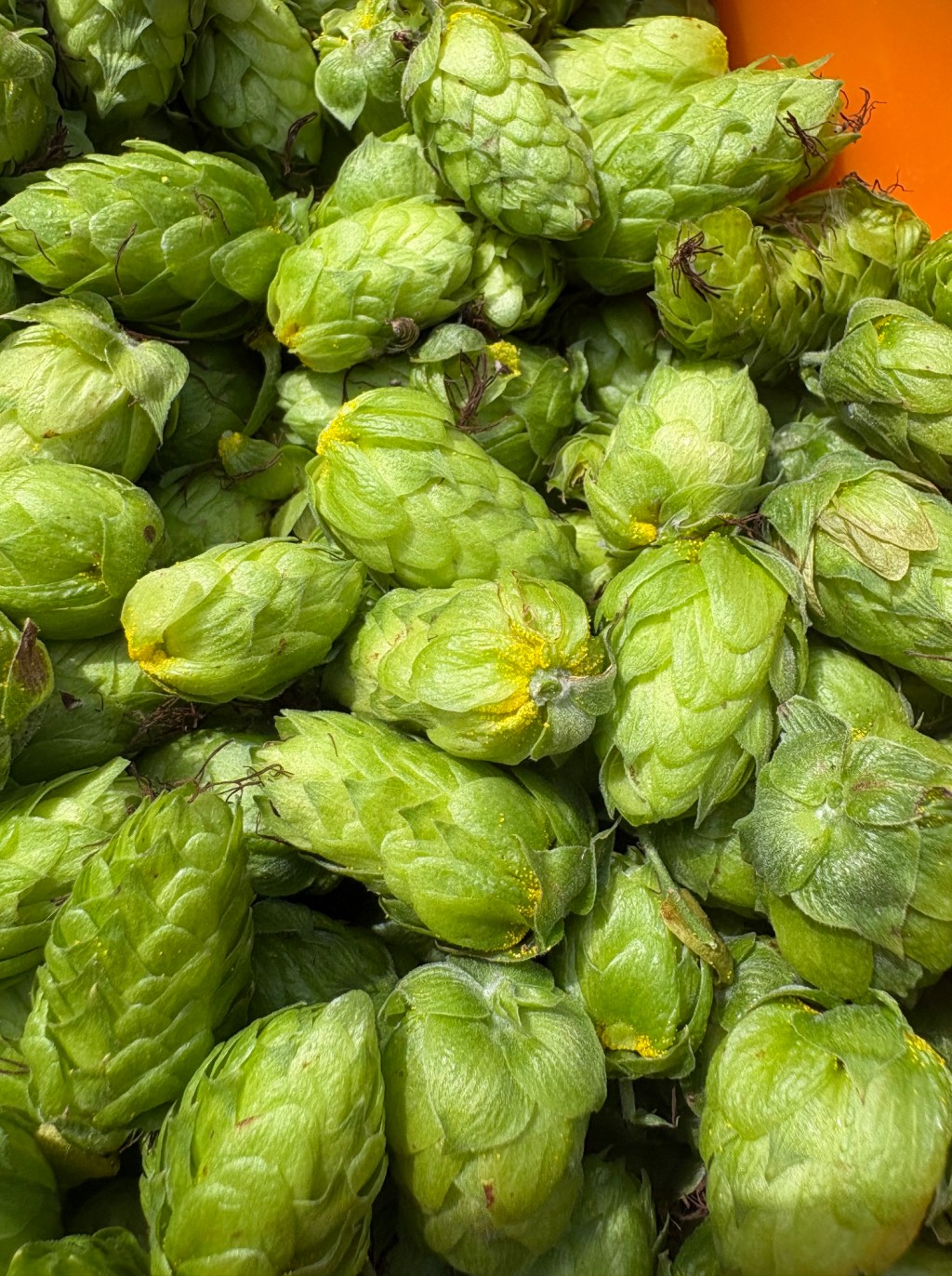
For years, hops have had a very specific job around our homestead: make the beer better.
As a homebrewer, I originally started growing hops because there is something especially satisfying about walking outside, harvesting your own fragrant cones, and using them in a batch of beer that began right here at home. Once established, hops are generous plants. By late summer, the vines—or more accurately, bines—can be covered with papery green cones carrying that unmistakable resinous, bitter aroma every brewer recognizes.
For a long time, nearly everything we harvested was destined for the brew kettle.
In recent years, however, we have started setting some of the harvest aside for another shelf entirely: the home apothecary.
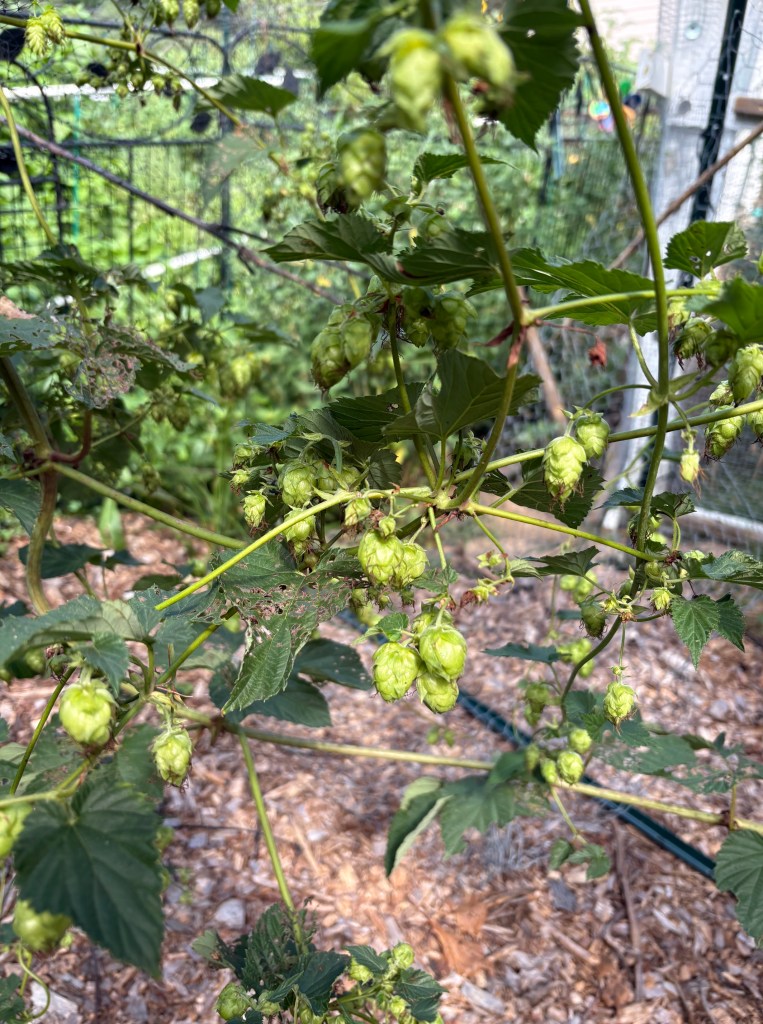
Hops (Humulus lupulus) have a medicinal history that stretches well beyond brewing. Those same bitter, aromatic compounds responsible for balancing the sweetness of malt have also given hops a long-standing place in traditional herbalism, particularly as a gentle herb for restlessness, nervous tension, and sleep.
So these days, when harvest season arrives, some cones still go into beer—but others are dried for tea, tincture, and our herbal shelves.
And it has given us an entirely new appreciation for a plant we thought we already knew.
Medicinal Benefits of Hops
The female flower cones of the plant, known botanically as strobiles, contain golden resin glands that produce potent volatile oils and bitter acids .
- Deep nervous system support: Hops act as a reliable sedative and relaxing nervine, helping quiet an overactive mind and encouraging deep, restorative rest .
- GABA and sleep modulation: Specific compounds in the resin interact with the brain’s calming GABA pathways to soothe restlessness, tension, and mild anxiety .
- Digestive stimulation: The distinct bitterness acts as a traditional digestive tonic, triggering gastric secretions and relieving nervous stomach spasms .
- Hormone balance: Hops contain potent plant phytoestrogens, making them a supportive ally for easing hot flashes and other transitions during menopause .
- Cellular defense: The cones are packed with protective antioxidants and polyphenols that help soothe internal tissue inflammation .
Laboratory research has explored antioxidant, antimicrobial, anti-inflammatory, metabolic, and other biological activities associated with the compounds found in hops.
Harvesting the Cones
Timing your harvest ensures the highest concentration of active resin before the weather turns.
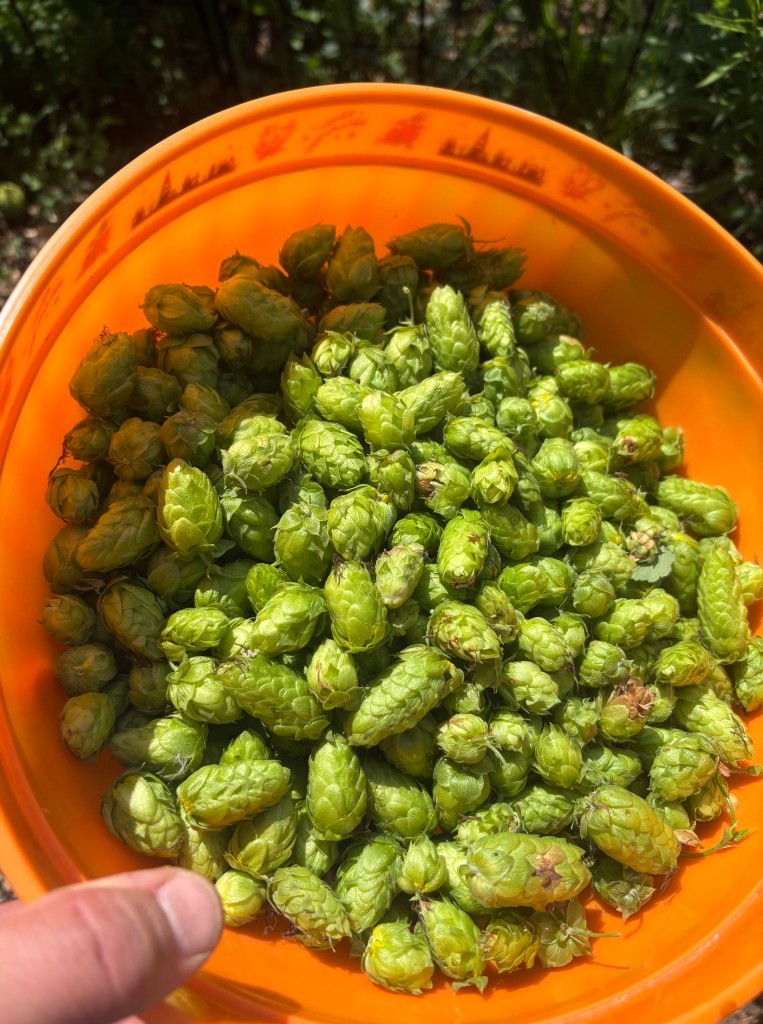
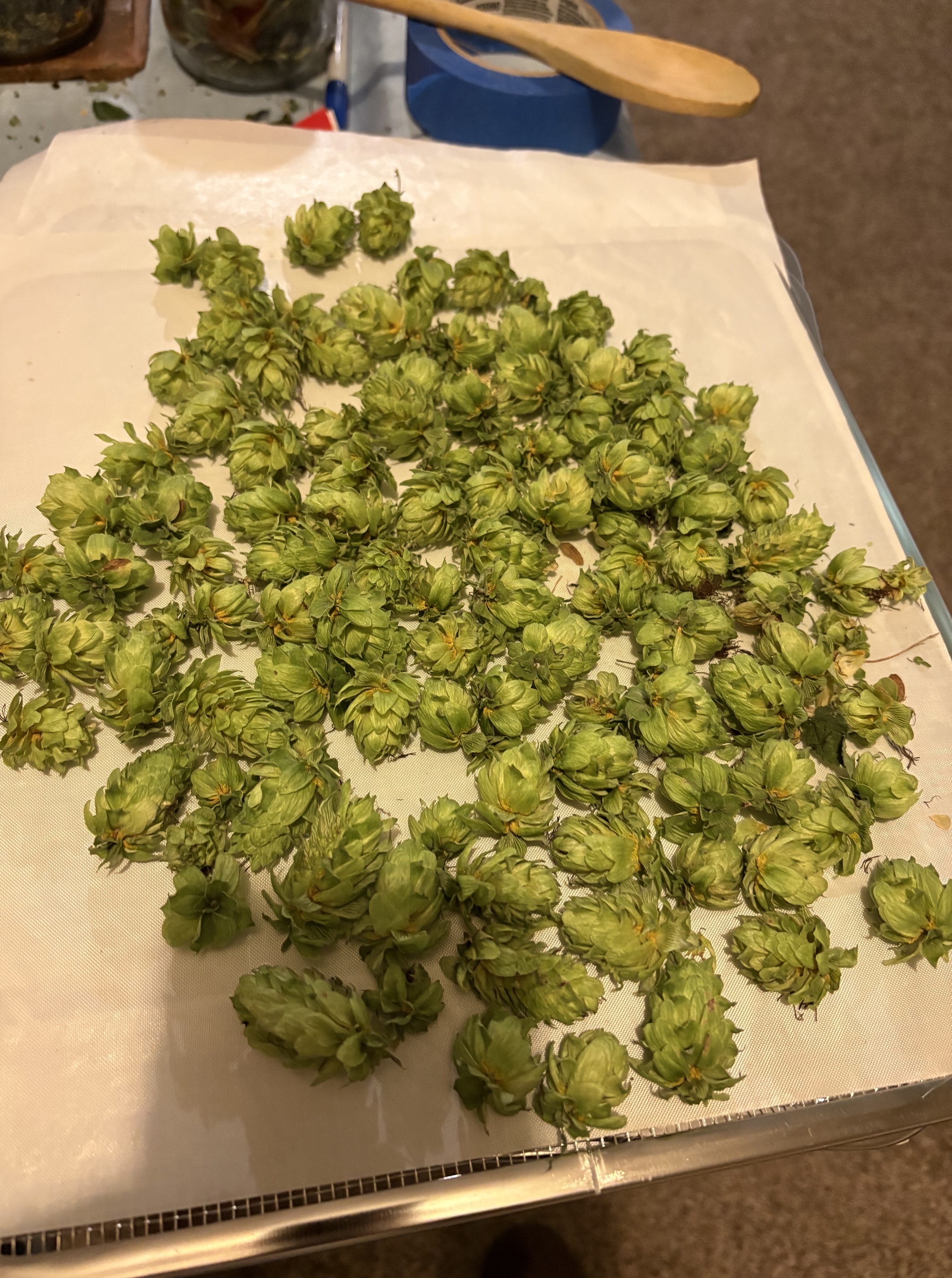
Wait until the green cones feel light, dry, and papery to the touch rather than damp or spongy. When you gently open a cone, you should see bright yellow lupulin powder clustered at the base of the bracts, releasing a strong, earthy aroma. You can use the cones fresh right off the bines or dry them on screens in a dark, warm space for long-term storage.
Making a Hop Tincture
One of our favorite ways to preserve hops medicinally is as a simple tincture.
A tincture extracts plant constituents into alcohol, creating a concentrated preparation that takes up very little room on the apothecary shelf and keeps far longer than dried herbs alone.
For beginners, I recommend starting with properly dried hop cones. Their moisture content is easier to account for, and dried hops have a long history of use in tincture preparations.
Extracting hops in high-proof alcohol captures both the fat-soluble resins and the bitter components that water alone cannot fully pull .
- Place your dried hop cones into a clean glass jar until it is about half full, or fill it two-thirds full if using fresh whole cones.
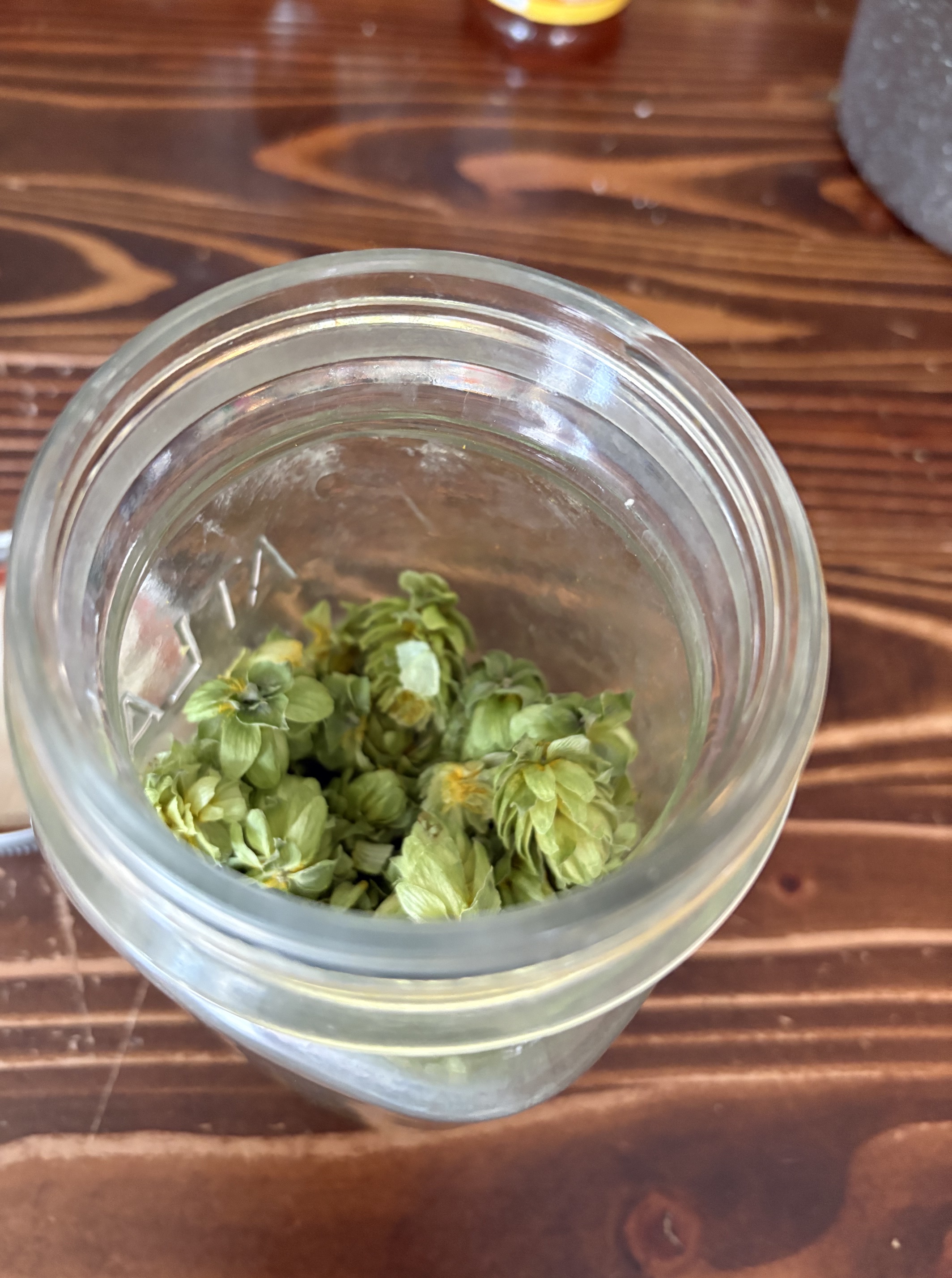
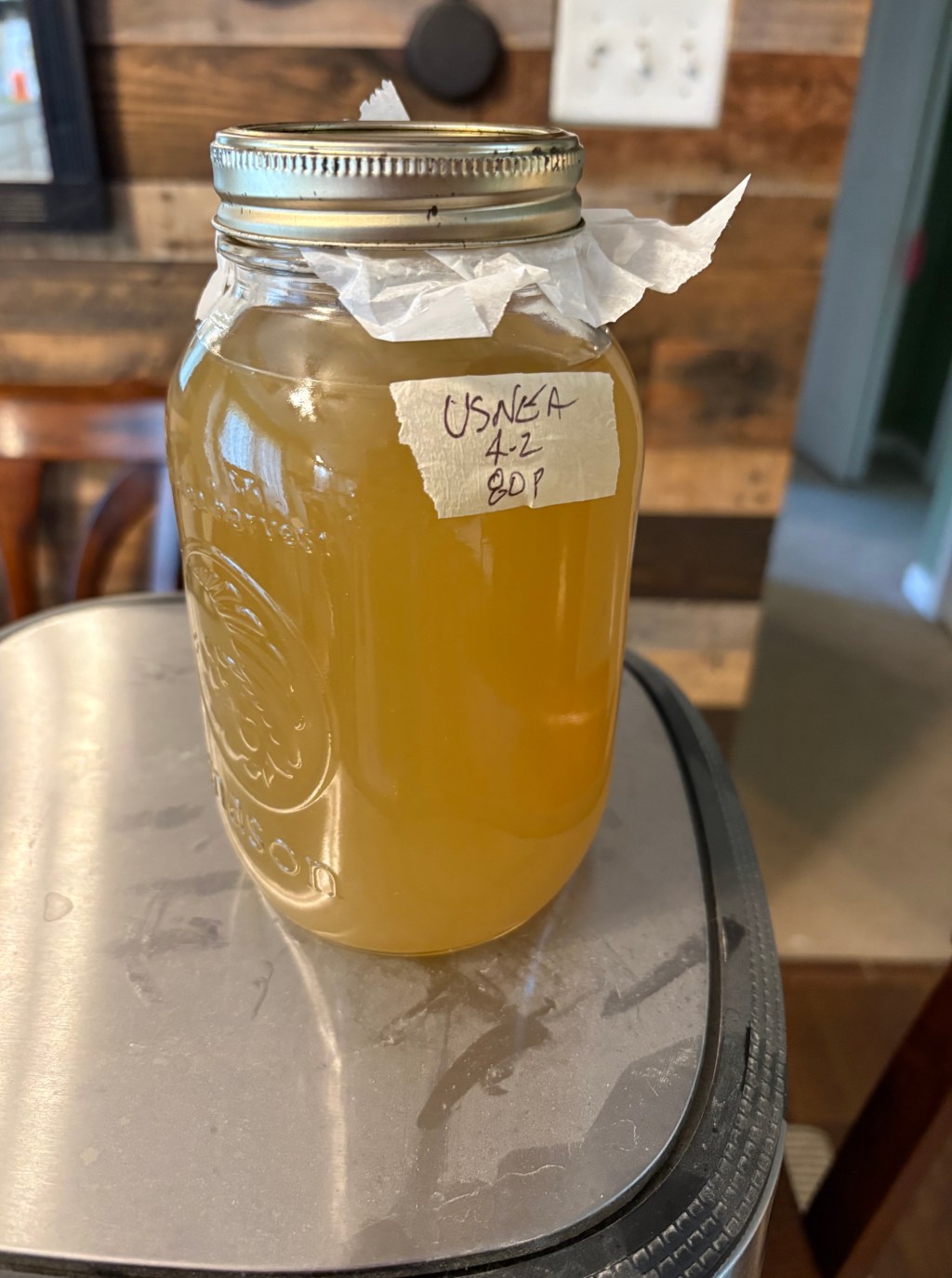
- Pour 80-proof to 100-proof vodka over the hops until the plant material is completely submerged by at least an inch of liquid.
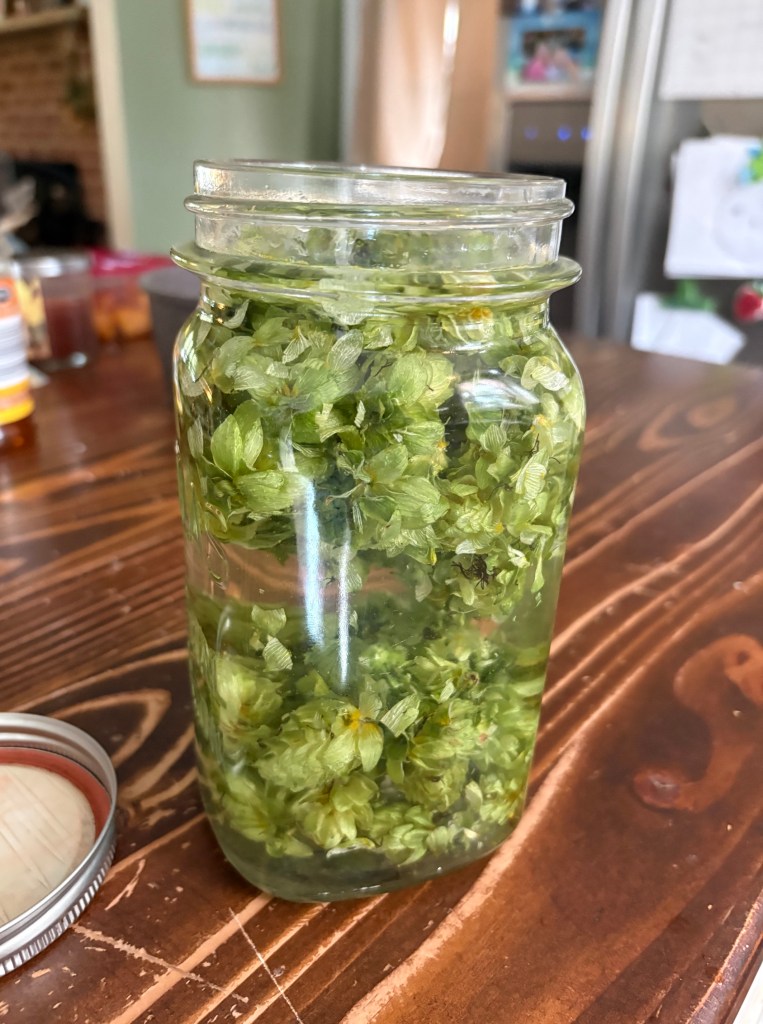
- Cap the jar tightly and place it in a cool, dark cupboard away from direct sunlight.
- Shake the jar daily for 4 to 6 weeks to encourage thorough extraction of the resinous compounds.
- Strain the liquid through a fine-mesh strainer lined with cheesecloth, pressing the cones firmly to extract all the liquid.
- Pour the finished tincture into clean amber dropper bottles and store them in a dark pantry.
Working with Your Medicine
The European herbal monograph lists traditional adult preparations of hop tincture in the range of approximately 1–2 mL per dose, particularly for mild mental stress and as a sleep aid.
For home herbalism, I prefer to treat that information as a reference point rather than a universal prescription.
Because hops are intensely bitter and sedating, a small dose goes a long way .
Taking a dropperful diluted in a splash of warm water about thirty minutes before bedtime can help ease nighttime tension and prepare the body for deep rest . Due to their strong estrogenic activity, hops should be avoided by individuals with hormone-sensitive conditions, and as with any new herb, you should consult your healthcare provider before adding it to your routine .
🍺 Seeing an Old Plant in a New Way
There is something I really enjoy about finding another use for a plant we have grown for years.
Hops originally earned their space here because I homebrew.
Every spring we watched the first shoots emerge. Every summer we trained those rapidly growing bines upward. Every late summer we squeezed cones between our fingers, checked the lupulin, smelled them, harvested them, dried them, and eventually tossed them into the brew kettle.
We knew our hops pretty well.
Or at least we thought we did.
Learning about their medicinal history has made us look at those same plants differently.
Do you grow hops? If so, are yours destined for the brew kettle, the apothecary—or a little of both?


 RJ Homestead
Leave a comment